
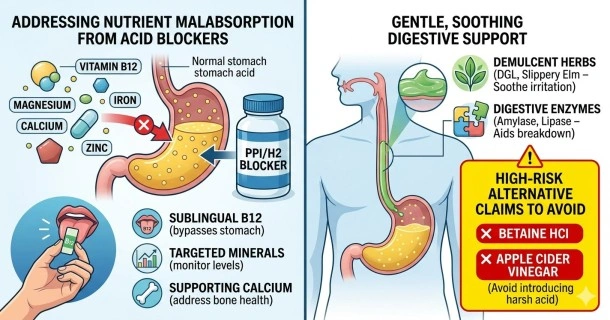
Explore the relationship between GERD, acid-blocking medications, and nutrient deficiencies. Learn about safe supplements for chronic acid reflux under medical guidance.
Dietary Supplements for GERD: Addressing Deficiencies and Supporting Digestion
When exploring dietary supplements for Gastroesophageal Reflux Disease (GERD), it is essential to approach management through a scientifically sound lens. In mainstream gastroenterology, supplements are not typically used as primary "cures" for structural reflux issues. Instead, their clinical utility centers on two specific goals: addressing nutrient malabsorption caused by long-term acid-suppressing medications and utilizing gentle, soothing agents to support overall digestive wellness.
Because the upper gastrointestinal tract lining can be highly sensitive or inflamed, introducing unverified alternative therapies without clear guidelines can worsen your symptoms.
Addressing Nutrient Deficiencies from Acid Suppression
While medications like Proton Pump Inhibitors (PPIs) and H2 blockers are highly effective at allowing esophageal tissue to heal, stomach acid is biologically required to break down and absorb certain micronutrients. Prolonged, unmonitored acid suppression can occasionally lead to specific deficiencies:
- Vitamin B12: Stomach acid and gastric enzymes are necessary to detach Vitamin B12 from dietary proteins. Long-term use of strong acid blockers can impair this process, potentially leading to fatigue or anemia. Sublingual supplements or clinical injections bypass this absorption barrier.
- Magnesium: Clinical data indicates that long-term PPI use can interfere with the active transport of magnesium in the intestines. Periodic monitoring of magnesium levels is often recommended for individuals on long-term therapy.
- Calcium and Bone Health: Calcium requires an acidic gastric environment to dissolve effectively for absorption. Chronic acid suppression has been epidemiologically linked to reduced calcium absorption, which can impact bone density over extended periods.
- Zinc and Iron: Both of these essential minerals rely on optimal stomach acidity to reach their highly absorbable, bioavailable forms.
Soothing and Digestive Support Options
If you are looking to support your digestive health alongside standard lifestyle modifications, several low-risk options may be discussed with a physician:
- Digestive Enzymes: Formulations containing amylase, lipase, and protease can assist in breaking down macronutrients in the upper digestive tract. By helping food process efficiently, they may help minimize prolonged stomach fullness (gastric distention), reducing upward pressure on the lower esophageal sphincter (LES).
- Targeted Probiotics: Cultivating a balanced gut microbiome using high-quality probiotic strains (such as Lactobacillus and Bifidobacterium) supports overall bowel motility and general digestive health, minimizing secondary issues like bloating.
- Demulcent Herbs (e.g., DGL, Slippery Elm): While not listed in the original text, clinically recognized options like Deglycyrrhizinated Licorice (DGL) or Slippery Elm are frequently preferred over harsh acids. These compounds naturally form a soothing, gel-like barrier over mucosal tissue, helping protect the esophagus from residual acid irritation.
High-Risk Alternative Claims to Avoid
Several widespread online remedies carry significant clinical risks and should be approached with extreme caution:
- Betaine HCl and Concentrated Vinegar: Taking hydrochloric acid pills or undiluted vinegars under the assumption that you have "low stomach acid" can be exceptionally dangerous. If your esophagus is already inflamed (Esophagitis) or has open sores (Ulcers), introducing concentrated exogenous acid can cause severe tissue irritation and pain.
- Unmonitored High-Dose Minerals: Supplementing with massive doses of minerals like magnesium or zinc without blood testing can induce gastrointestinal distress, such as severe diarrhea, or place undue stress on your kidneys.
Note: Please strictly double-check the physical labels, ingredient listings, and manufacturing quality seals on any dietary supplement to ensure safety, purity, and proper consumption instructions.
Differential Diagnosis and Integrated Management
Persistent digestive complaints, malabsorption, and severe bloating can sometimes point to alternative gastrointestinal conditions rather than simple mechanical GERD. Conditions like Small Intestinal Bacterial Overgrowth (SIBO), chronic gastritis, or specific food intolerances require distinct diagnostic testing and specialized treatment plans.
A safe, structured approach to integrating supplements into your routine involves multiple steps:
- Consultation First: Always discuss new supplement protocols with your healthcare provider, especially if you are currently taking prescription acid suppressants.
- Targeted Blood Panels: Requesting baseline lab tests for Vitamin B12, iron, and bone density markers if you have been on PPI therapy for more than a year.
- Gradual Introduction: Introducing one gentle supportive agent at a time to accurately monitor how your digestive system reacts.
Frequently Asked Questions (FAQs)
Why do acid reflux medications cause Vitamin B12 deficiency?
Stomach acid plays a vital role in separating Vitamin B12 from the food proteins you eat. When medications like PPIs significantly lower your stomach's acid production, your body cannot efficiently unlock and absorb the vitamin from your diet, which can lead to a deficiency over time.
Is it safe to take Apple Cider Vinegar for heartburn?
For the majority of individuals with true structural GERD, drinking apple cider vinegar is not recommended. If the lining of your esophagus is already irritated or inflamed by chronic acid reflux, pouring an additional acidic liquid over that tissue can aggravate the burning sensation and cause further localized irritation.
How does magnesium impact the lower esophageal sphincter (LES)?
Magnesium is a mineral that plays an important role in regular muscle function throughout the body. While a severe deficiency can theoretically impact smooth muscle regulation, self-medicating with unmonitored high doses can cause gastrointestinal side effects like cramping and diarrhea. It is best to have your levels evaluated by a doctor.