
Discover when GERD surgery is necessary, how laparoscopic Nissen fundoplication works to stop chronic acid reflux, and what to expect during recovery.
GERD Surgery: When Is It Needed and What to Expect?
While most people can manage Gastroesophageal Reflux Disease (GERD) with acid-reducing medications and lifestyle modifications, surgery becomes a crucial option for those who do not find relief. If chronic heartburn, regurgitation, and throat irritation continue despite treatment, a surgical procedure can restore your quality of life and protect your esophagus from long-term damage.
What is GERD Surgery (Nissen Fundoplication)?
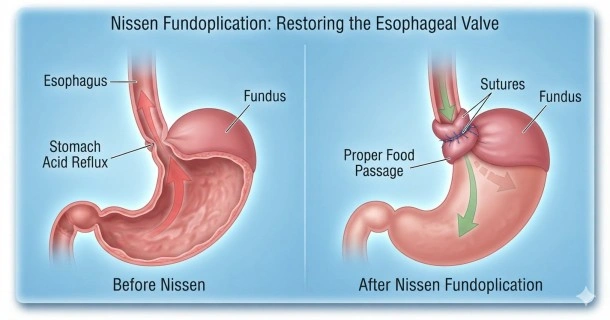
The gold standard surgical treatment for severe chronic acid reflux is known as a Nissen Fundoplication. This procedure is designed to strengthen the lower esophageal sphincter (LES), the muscular ring that acts as a one-way valve between your esophagus and stomach.
During a Nissen fundoplication, a surgeon takes the upper portion of the stomach (the fundus) and wraps it completely around the lower end of the esophagus. This wrap is sewn into place, creating a tighter barrier that prevents stomach acid and digestive juices from backing up into the esophagus.
Today, this procedure is most commonly performed using laparoscopic surgery. Instead of a single large incision, the surgeon uses a tiny camera and specialized instruments inserted through a few small abdominal punctures. Laparoscopic surgery generally results in less postoperative pain, shorter hospital stays, and a quicker return to normal activities.
Who is a Candidate for GERD Surgery?
Surgery is not typically the first line of defense against acid reflux. However, a gastroenterologist or surgeon may recommend a Nissen fundoplication if you meet any of the following criteria:
- Severe, refractory symptoms: Your GERD symptoms remain disruptive despite taking maximum doses of prescription medications like Proton Pump Inhibitors (PPIs).
- Extraesophageal complications: You experience respiratory issues triggered by acid reflux, such as chronic asthma, recurrent pneumonia, a persistent cough, or severe throat inflammation.
- Structural or tissue damage: You have developed complications like esophageal strictures (scar tissue causing narrowing), severe esophagitis, or a large hiatal hernia.
- Medication intolerance or preference: You experience adverse side effects from long-term acid suppressants, or you prefer a one-time surgical intervention over lifelong daily medication.
Success Rates and Potential Side Effects
Laparoscopic Nissen fundoplication has a high success rate, with the majority of patients experiencing significant, long-term relief from heartburn and regurgitation. However, because the procedure alters gastric anatomy, patients should be aware of potential long-term side effects:
- Temporary swallowing difficulties (Dysphagia): Mild difficulty swallowing is common immediately after surgery due to localized swelling. This usually resolves within a few weeks as the tissue heals.
- Gas-bloat syndrome: Because the new valve is highly effective, some patients find it difficult to belch or vomit. This can lead to temporary abdominal bloating, increased flatulence, or mild nausea.
- Changes in bowel habits: A small percentage of patients may experience temporary diarrhea or accelerated gastric emptying, which typically stabilizes over time.
Frequently Asked Questions (FAQ)
How long does it take to recover from laparoscopic GERD surgery?
Most patients spend one to two nights in the hospital following a laparoscopic Nissen fundoplication. You will follow a specific liquid-to-soft-food diet for several weeks to allow the esophagus to heal. Most individuals can return to light activities and desk work within 2 to 3 weeks, though full strenuous activity should be avoided for roughly 6 weeks.
Can GERD return after having a Nissen fundoplication?
Yes, it is possible for reflux symptoms to recur years after the procedure. Over time, the surgical wrap can loosen, breakdown, or slip, especially if a patient experiences persistent severe coughing, heavy lifting, or significant weight gain. However, the vast majority of patients maintain excellent symptom control for 10 to 15 years or longer.
What are the main alternatives to a Nissen fundoplication?
If a standard Nissen fundoplication is not ideal, modern alternatives include a partial fundoplication (Toupet wrap), the LINX reflux management system (a magnetic ring placed around the LES), or transoral incisionless fundoplication (TIF), which is an endoscopic, incisionless option for select candidates.