
Discover the medical causes and risk factors behind Gastroesophageal Reflux Disease (GERD). Learn how hiatal hernias, lifestyle, and medications affect the LES.
Understanding the Underlying Causes of GERD
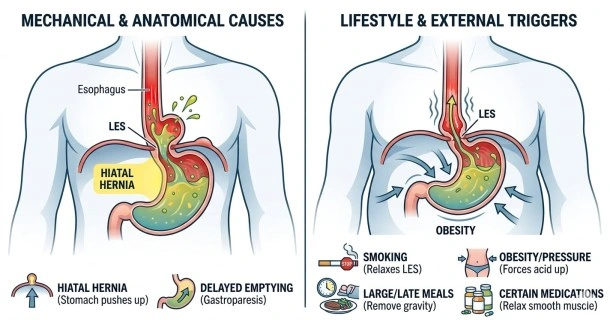
Gastroesophageal Reflux Disease (GERD) is rarely triggered by a single factor. Instead, it is usually the result of a combination of mechanical, anatomical, and lifestyle factors that compromise the lower esophageal sphincter (LES) or increase pressure within the abdomen.
When the equilibrium between the digestive tract's protective barriers and gastric pressure is disrupted, stomach acid is allowed to escape into the esophagus.
Mechanical and Anatomical Causes
The primary mechanical issue in GERD is a malfunctioning lower esophageal sphincter (LES). Several structural issues can lead to this dysfunction:
- Hiatal Hernia: This occurs when the upper portion of the stomach protrudes upward through the diaphragm into the chest cavity. Because the diaphragm normally works in tandem with the LES to anchor it and provide extra closure pressure, a hiatal hernia can severely impair this barrier, leading to frequent reflux.
- Increased Intra-Abdominal Pressure: Physical pressure on the abdominal cavity forces gastric contents upward against the LES. This is a primary reason why individuals who are overweight or obese, as well as individuals during pregnancy, experience significantly higher rates of GERD.
- Delayed Gastric Emptying: Conditions like gastroparesis cause food to remain in the stomach for abnormally long periods. This prolonged fullness creates continuous upward pressure on the esophageal valve.
Lifestyle and Dietary Triggers
Daily habits and physical choices can directly influence how frequently the LES relaxes or how much acid the stomach produces.
- Large or Late-Night Meals: Consuming large portions stretches the stomach (gastric distension), which mechanically triggers the LES to relax. Eating shortly before lying down removes the protective effect of gravity, making acid backflow highly likely.
- Cigarette Smoking: Nicotine relaxes the smooth muscle tissue of the LES, reducing its resting pressure. Smoking also decreases saliva production, which is necessary to help neutralize small amounts of acid in the esophagus.
- Physical Strain and Posture: Slouching or wearing tight-fitting clothing (like restrictive belts) compresses the abdomen, elevating internal pressure. Similarly, heavy weightlifting or intense exercise immediately after a meal can force acid upward.
Medication-Induced Acid Reflux
Certain pharmaceutical compounds can inadvertently worsen or cause GERD symptoms, either by relaxing the LES muscle or by directly irritating the esophageal lining.
- NSAIDs and Pain Relievers: Common over-the-counter medications like ibuprofen and aspirin can irritate the mucosal lining of the entire upper gastrointestinal tract.
- Blood Pressure Medications: Calcium channel blockers and beta-blockers, which are designed to relax vascular smooth muscle, can also relax the smooth muscle of the LES.
- Muscle Relaxants and Sedatives: Medications that cause generalized muscle relaxation frequently lower the tone of the esophageal sphincter.
Note: Please make sure to double-check the physical label of any prescription or over-the-counter medication to see if gastrointestinal issues are listed as a potential side effect. Never stop taking a prescribed medication without consulting your doctor first.
Differential Diagnosis: Conditions That Resemble GERD
Because symptoms like chest pain, chronic coughing, and indigestion can point to several distinct medical conditions, a proper clinical evaluation is necessary. Conditions that may share visual or symptomatic characteristics with GERD include:
- Eosinophilic Esophagitis (EoE): An allergic or immune-mediated condition that causes inflammation in the esophagus, often presenting with difficulty swallowing.
- Gastric or Duodenal Ulcers: Open sores in the lining of the stomach or small intestine that cause burning abdominal pain, sometimes triggered by an H. pylori bacterial infection.
- Esophageal Motility Disorders: Conditions like achalasia, where the muscles of the esophagus fail to properly move food down into the stomach, mimicking the swallowing difficulties of severe GERD.
Frequently Asked Questions (FAQs)
Does low stomach acid cause GERD?
There is no strong clinical evidence supporting the widespread internet claim that low stomach acid causes the lower esophageal sphincter to open and trigger GERD. Instead, standard clinical science shows that GERD is primarily a mechanical issue involving sphincter weakness or excessive abdominal pressure, regardless of the precise acidity level of the gastric juice.
How does being overweight contribute to acid reflux?
Excess weight increases the physical pressure inside your abdominal cavity. This internal pressure acts like a pump, pushing against the stomach and forcing its acidic contents upward through the lower esophageal sphincter into the esophagus.
Can stress cause GERD?
While stress may not directly cause the physical structural failure of the lower esophageal sphincter, it is clinically proven to hyper-sensitize the nervous system. This means that individuals under high stress often perceive regular or mild amounts of acid reflux as significantly more painful and severe.