
How is Cyclic Vomiting Syndrome (CVS) diagnosed? Explore the official diagnostic criteria, necessary ruling-out tests, and the latest clinical guidelines.
How Is Cyclic Vomiting Syndrome Diagnosed?
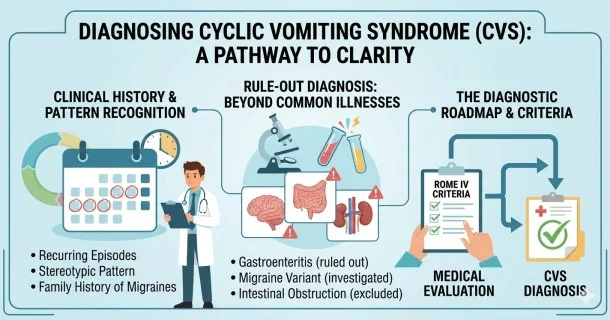
Diagnosing Cyclic Vomiting Syndrome (CVS) is primarily a clinical process because there is no single diagnostic biomarker, blood test, or imaging study that can definitively confirm its presence. Instead, medical professionals rely on specific symptom patterns while systematically ruling out other conditions that cause severe, recurrent vomiting.
Because CVS is classified as a disorder of gut-brain interaction (formerly called functional gastrointestinal disorders), doctors evaluate patients using strict diagnostic frameworks established by leading medical organizations.
Official Diagnostic Criteria for Cyclic Vomiting Syndrome
To receive a confirmed diagnosis of CVS, a patient must meet specific clinical parameters. Medical practitioners evaluate these patterns using two primary standards: the North American Society for Pediatric Gastroenterology, Hepatology, and Nutrition (NASPGHAN) guidelines and the Rome IV criteria.
The Clinical Indicators Checklist
A standard clinical diagnosis requires that the patient exhibits the following distinct hallmarks:
- Attack Frequency: At least 5 discrete episodes in any interval, or a minimum of 3 separate attacks within a 6-month period.
- Episode Duration: Intense, unrelenting nausea and vomiting episodes lasting anywhere from 1 hour up to 10 days.
- Interval Spacing: Acute episodes must occur at least 1 week apart from one another.
- Vomiting Severity: During the peak of an attack, vomiting occurs rapidly—at least 4 times per hour for a minimum duration of 1 hour.
- Stereotypical Pattern: The episodes are highly predictable and uniform in timing, symptoms, and intensity for that specific individual.
- Return to Baseline: The patient experiences a complete return to normal, healthy baseline wellness between episodes.
- Accompanying Autonomic Symptoms: Attacks are often accompanied by noticeable physical signs such as extreme pallor (paleness), lethargy, abdominal pain, intense salivation (drooling), or sensitivity to light and sound.
Differential Diagnosis: Medical Tests Required to Rule Out Other Conditions
Since cyclic vomiting mimics several dangerous structural, metabolic, and neurological diseases, a targeted diagnostic workup is essential to rule out other underlying causes. Specialists categorize these baseline diagnostic evaluations into targeted testing groups:
| Underlying Risk Category | Targeted Diagnostic Test | Purpose of Test |
|---|---|---|
| Gastrointestinal Blockages | Abdominal Ultrasound & Upper GI Contrast Series | Rules out anatomical obstructions like intestinal malrotation, blockages, or intermittent volvulus. |
| Metabolic & Mitochondrial Disorders | Plasma Electrolytes, Ammonia, Serum Amino Acids, and Urine Organic Acids | Excludes inborn errors of metabolism, particularly if episodes are triggered by fasting or high-protein meals. |
| Neurological / Central Nervous System | Brain MRI | Investigates potential neurological causes like brain tumors (subtentorial neoplasms) or Chiari malformations if the patient has an altered mental status. |
| Inflammatory / Systemic Illness | Amylase, Lipase, ALT, and GGT Enzymes | Rules out acute pancreatitis, gallbladder complications, or liver disease during or immediately following an attack. |
The Four Phases of a CVS Attack
Understanding the progression of Cyclic Vomiting Syndrome helps clinicians map out abortive and preventative treatment plans. The condition typically follows four distinct phases:
- The Inter-episodic (Remission) Phase: The symptom-free period between attacks where the individual feels completely healthy.
- The Prodromal Phase: The warning period where the patient senses an oncoming attack. Symptoms include early morning nausea, sweating, and intense anxiety. Abortive therapies are most effective when given during this window.
- The Emetic (Acute) Phase: The period characterized by intense, continuous vomiting, retching, severe abdominal pain, and inability to keep fluids down.
- The Recovery Phase: The phase beginning when vomiting ceases. The patient begins to regain energy, color, and appetite as they return to their baseline wellness.
Frequently Asked Questions (FAQs)
Can a blood test confirm Cyclic Vomiting Syndrome?
No. There is no specific blood test, fluid draw, or genetic marker that can definitively diagnose Cyclic Vomiting Syndrome. Doctors use blood and urine tests solely to rule out other serious conditions—such as metabolic disorders, liver disease, or electrolyte imbalances—and to check for dehydration during an active vomiting cycle.
What is the difference between Cyclic Vomiting Syndrome (CVS) and Cannabinoid Hyperemesis Syndrome (CHS)?
While both conditions cause identical cycles of severe, unyielding nausea and rapid-fire vomiting, their root causes differ. CVS is a functional gut-brain disorder. CHS is specifically triggered by chronic, long-term cannabis (marijuana) use and typically resolves completely once a person permanently stops consuming cannabis.
At what age does Cyclic Vomiting Syndrome typically develop?
CVS can develop at any stage of life. While it is most frequently diagnosed in young children—with a typical onset age between 3 and 7 years old—adult-onset CVS is increasingly recognized by gastroenterologists, often beginning when a patient is in their late teens or twenties.
Is Cyclic Vomiting Syndrome related to migraines?
Yes, there is a very strong genetic and clinical link between CVS and migraines. Many individuals with CVS have a personal or family history of migraine headaches, and children with CVS frequently outgrow the condition only to develop classic abdominal or visual migraines later in life. Because of this connection, antimigraine medications are often highly effective at preventing or stopping CVS attacks.