
Explore clinical treatment options for Cyclic Vomiting Syndrome (CVS). Learn about daily preventative medications, abortive rescue therapies, and IV protocols.
Cyclic Vomiting Syndrome Treatment: Medical Protocols and Medications
Effective Cyclic Vomiting Syndrome (CVS) treatment requires a specialized, multiphasic pharmacological strategy. Because CVS is a complex functional disorder of the gut-brain axis, standard over-the-counter antiemetics are rarely sufficient to halt an active attack.
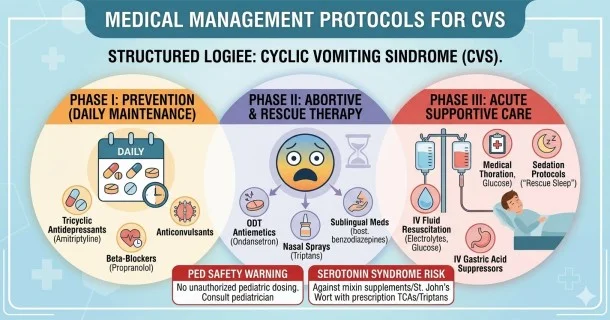
A comprehensive clinical treatment plan is divided into distinct operational goals: daily prophylactic therapy to prevent future cycles, immediate abortive therapy during the warning window, and acute supportive care to manage severe emetic flares.
1. Prophylactic Therapy (Daily Prevention)
Prophylactic management is indicated for patients who suffer from frequent, prolonged, or highly disabling attacks. Because medical evidence links CVS closely with migraine pathophysiology, long-term maintenance relies heavily on daily anti-migraine medications to stabilize the neuro-enteric system.
- Tricyclic Antidepressants (TCAs): Amitriptyline remains a primary first-line choice for adult prophylaxis. It alters neurotransmitter pathways to diminish baseline gut-brain hypersensitivity.
- Beta-Blockers: Propranolol is widely utilized as an effective preventative choice, helping block the autonomic adrenaline rushes that trigger cyclic vomiting.
- Anticonvulsants: Medications like topiramate or divalproex sodium help reduce hyper-reactivity across central neurological pathways.
- Pediatric Specifics: In younger children (typically under the age of 5), cyproheptadine—a sedating antihistamine with anti-serotonergic properties—is frequently preferred over TCAs due to its favorable pediatric safety profile.
2. Abortive & Rescue Therapy (The Prodrome Window)
The success of abortive treatment depends heavily on timing. Medications must be taken at the very first sign of the prodrome phase (nausea, sweating, or pallor) to interrupt the emetic cascade before the stomach can no longer retain oral intake.
- 5-HT3 Receptor Antagonists (Antiemetics): Ondansetron, granisetron, or dolasetron block serotonin receptors in the gastrointestinal tract and brainstem. They are frequently administered via orally disintegrating tablets (ODT), transdermal patches, or sublingual solutions to bypass the stomach.
- NK1 Receptor Antagonists: Aprepitant is an advanced antiemetic that acts on substance P receptors, often combined with ondansetron for severe, resistant attacks.
- Antianxiety Agents (Anxiolytics): Benzodiazepines like lorazepam or alprazolam help calm intense panic and anticipatory anxiety, which are major triggers for adult cyclic vomiting flares.
- Migraine-Specific Triptans: Intranasal or subcutaneous sumatriptan can rapidly abort a cycle if a patient has a prominent personal or family history of migraine headaches.
3. Acute Emetic Care & Sedation (During an Attack)
Once a patient enters the acute emetic phase, severe vomiting and dry-heaving make oral intake impossible. Treatment shifts away from oral remedies toward aggressive clinical intervention to prevent systemic collapse.
- Intravenous Fluid Resuscitation: Inpatient hospitalization is often required to administer high-volume IV fluids containing balanced saline, glucose, and potassium to correct severe dehydration and metabolic ketoacidosis.
- Gastric Acid Suppression: Intravenous proton pump inhibitors (such as pantoprazole) or H2 blockers are given to protect the esophagus from severe chemical burns caused by highly acidic gastric fluids.
- Therapeutic Sedation ("Rescue Sleep"): When nausea becomes intractable, doctors may utilize a combination of heavy sedatives and antiemetics (such as chlorpromazine combined with diphenhydramine) in an emergency or inpatient setting. This deep, medically supervised sleep helps calm centrally generated vomiting signals in the brainstem, allowing the attack to pass.
Phased Treatment Protocol Checklist
| CVS Phase | Primary Treatment Goal | Common Medications Utilized |
|---|---|---|
| Phase I: Interictal | Prevent future flare-ups | Amitriptyline, Propranolol, Topiramate, Cyproheptadine |
| Phase II: Prodrome | Abort the impending cycle | Sublingual Ondansetron, Lorazepam, Sumatriptan Nasal Spray |
| Phase III: Acute Emetic | Maintain hydration & induce sleep | IV Fluids, Intravenous Antiemetics, Medical Sedation Protocols |
| Phase IV: Recovery | Safely restore nutrients | Electrolyte solutions, Bland carbohydrates, Proton Pump Inhibitors |
Critical Clinical Safety Warnings
Pediatric Dosage Restrictions
Never calculate or administer medication dosages for infants or young children at home without direct pediatric supervision. Weight-based calculations for potent antiemetics like ondansetron require highly precise adjustments by a medical provider to prevent acute toxicities or serious cardiac anomalies, such as QT-interval prolongation.
Herb and Supplement Interactions
While some patients look into herbal options like Chamomile, Valerian Root, or St. John's Wort for mild anxiety relief during wellness intervals, these substances must be approached with caution. Unregulated herbal supplements can interact dangerously with prescription CVS medications. For example, taking St. John's Wort alongside tricyclic antidepressants or triptans can cause Serotonin Syndrome, a potentially life-threatening medical emergency. Always confirm supplement safety with your specialist.
Frequently Asked Questions (FAQ)
Why are anti-migraine medications used to treat Cyclic Vomiting Syndrome?
Clinical and genetic studies show that CVS shares a primary neurological pathway with migraine headaches, leading experts to classify CVS as a functional "migraine variant." Both conditions feature episodic flare-ups driven by autonomic nervous system changes and mitochondrial issues. Because of this shared pathway, standard daily migraine preventative medications are highly effective at lowering brain-gut hypersensitivity and reducing the frequency of CVS attacks.
What should I do if a CVS rescue medication is immediately vomited up?
If oral rescue medications are vomited before they can take effect, you should not take a second oral dose at home. Instead, contact your gastroenterologist or go to an emergency clinic. To prevent this issue, specialists frequently prescribe rescue treatments via non-oral paths—such as sublingual orally disintegrating tablets (ODT), nasal sprays, or transdermal patches—allowing the medication to absorb directly into the bloodstream without entering the stomach.
When is hospitalization required during a cyclic vomiting episode?
Hospitalization becomes necessary when a patient enters the acute emetic phase and experiences severe, continuous vomiting that prevents them from keeping fluids down. If signs of advanced dehydration develop—such as dark or absent urine, extreme dizziness when standing, or confusion—the patient needs immediate emergency care for intravenous fluid resuscitation, electrolyte replacement, and IV antiemetic support.