
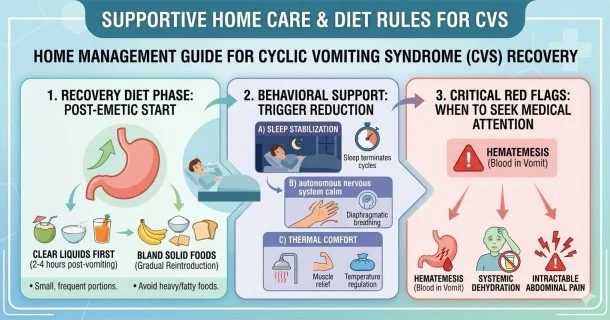
Discover effective home remedies for Cyclic Vomiting Syndrome. Learn about safe post-emetic recovery diets, ORS hydration tips, and trigger prevention.
Cyclic Vomiting Syndrome Home Remedies: Diet & Management Guidelines
Managing Cyclic Vomiting Syndrome (CVS) home remedies requires a careful, phased strategy. Because the acute emetic phase causes severe fluid depletion, home interventions must focus primarily on mitigating known triggers, supporting the body during recovery, and identifying safe rehydration methods.
While home management can significantly reduce the frequency of attacks and aid in post-episode recovery, it is critical to recognize when severe fluid loss requires immediate clinical or intravenous intervention.
Phased Dietary Management for CVS Recovery
During a cyclic vomiting flare-up, the gastrointestinal tract is highly sensitive. Forcing food or drink during the peak of an attack can worsen retching. Instead, dietary restoration must follow a systematic approach once vomiting stops.
The Acute Phase: Strict Fluid Maintenance
- Avoid Solid Foods: Do not attempt to consume solid or heavy foods while actively vomiting.
- Micro-Sipping Fluids: If the patient can manage small amounts of liquid during the prodrome or early recovery phases, introduce small sips (a teaspoon at a time) rather than large gulps. Large volumes of fluid stretch the gastric lining, which can trigger an emetic reflex.
- Clinical Oral Rehydration Solutions (ORS): Utilize medically balanced, over-the-counter ORS packets rather than plain water. Plain water can worsen electrolyte dilution (hyponatremia) when severe vomiting has already stripped the body of essential sodium and potassium minerals.
The Immediate Post-Emetic Phase: Clear Liquids
Once active vomiting has ceased for at least 2 to 4 hours, focus on replacing lost fluids and essential minerals with clear, stomach-friendly options:
- Natural Coconut Water: A gentle source of natural potassium and organic electrolytes.
- Diluted Rice Water (Congee Liquid): Provides basic carbohydrates that are incredibly easy on an inflamed stomach lining.
- Clear, Strained Vegetable or Carrot Broth: Supplies minimal sodium to help restore cellular fluid balances.
The Remission Phase: Reintroducing Solid Foods
When a patient’s natural appetite returns, slowly reintroduce solid nutrients using a modified BRAT diet blueprint and other low-residue options:
- The Core Elements: Bananas, white rice, applesauce, and plain white toast.
- Bland Carbohydrates: Saltine crackers, plain oatmeal prepared with water, or boiled potatoes.
- Nutrient Splitting: Eat small, frequent meals throughout the day instead of three large meals to reduce gastric pressure. Avoid eating large meals or heavy snacks within 2 to 3 hours of going to sleep.
Behavioral Home Interventions to Stop Triggers
Because the brain-gut axis in CVS patients is hyper-reactive to external stress and nervous system changes, several behavioral home strategies can help reduce your baseline risk.
1. Proactive Trigger Identification
Many patients can mitigate flare-ups by reviewing the 8 to 12 hours leading up to an attack to spot individual catalysts. Common culprits include:
- Dietary Specifics: Items containing high concentrations of chemical additives, aged cheeses, chocolate, fermented foods, sourdough bread, or heavy amounts of caffeine.
- Environmental Stimuli: Sudden changes in weather, exposure to flashing or bright lights, or strong chemical perfumes.
2. Autonomous Nervous System Regulation
Chronic stress, anxiety, and panic attacks can flood the gut-brain axis with adrenaline, triggering an emetic cascade.
- Diaphragmatic Abdominal Breathing: Lie flat on your back with your knees slightly bent. Place one hand on your abdomen. Inhale slowly through your nose, ensuring your stomach expands upward while your chest remains relatively still. Exhale slowly. Repeating this pattern 10 to 20 times can stimulate the vagus nerve, helping to quiet an overactive sympathetic nervous system response.
- Mindfulness and Stress Reduction: Incorporating daily meditation, gentle yoga, or calming sensory therapy can build natural resilience against panic-induced episodes.
3. Thermal Therapy (Hot and Cold Interventions)
Mirroring the behaviors seen in migraine care, temperature adjustments can help calm neuro-autonomic distress:
- Compulsive Hot Showers or Baths: Many individuals find significant, temporary relief from severe nausea and abdominal cramping by sitting in a hot shower or bath. The heat helps regulate altered autonomic temperature zones in the brainstem.
- Migraine Compress Packs: Applying a cool, damp compress or an ice pack wrapped in a cloth to the forehead or the back of the neck can provide comfort during the prodrome and recovery phases.
4. Sleep Stabilization as an Abortive Therapy
Profound sleep deprivation is a powerful physiological trigger for CVS. Conversely, deep sleep is one of the few natural ways the brain can terminate an active emetic cycle.
- Sensory Deprivation Environment: At the very first sign of a prodrome warning, retreat to a completely dark, quiet room. Eliminate all noise, screens, and bright lights.
- Rest Support: If prescribed safe, sleep-inducing medications or antiemetics by a physician, take them immediately at the start of the prodrome to encourage deep sleep before the acute emetic phase takes hold.
When to Seek Immediate Medical Attention
Home remedies are meant for supportive care and prevention. They cannot replace emergency medical services if a flare-up becomes dangerous. Seek immediate emergency medical treatment if you notice any of the following critical warning signs:
- Signs of Severe Dehydration: Complete inability to produce tears, an entirely dry mouth, dark or absent urine for more than 6 to 8 hours, severe dizziness when standing up, or confusion.
- Hematemesis: The presence of bright red blood or dark, "coffee-ground" material in the vomit.
- Intractable Pain: Severe, sharp abdominal pain that is localized or tender to the touch, which may point to an alternate structural emergency rather than a standard CVS flare-up.
- Prolonged Cycles: An acute emetic phase that continues relentlessly for several days without improvement, preventing any fluid retention.
Frequently Asked Questions (FAQ)
Can you make a safe oral rehydration solution at home if commercial ORS packets are unavailable?
Yes, in an urgent situation, you can prepare a basic oral rehydration solution using a precise clinical ratio to support fluid restoration. Blend six level teaspoons of sugar and one-half level teaspoon of salt into one liter of clean water. It is vital to measure these ingredients accurately, as incorrect salt ratios can worsen intestinal irritation or stress the kidneys. Reintroduce fluids slowly, using small spoonfuls every few minutes.
Why is drinking plain water sometimes discouraged during a severe cyclic vomiting flare-up?
When a person vomits repeatedly, their body loses large quantities of both fluids and essential minerals, particularly sodium and potassium. Drinking large amounts of plain water without electrolytes can dilute the remaining minerals in the bloodstream. This can lead to a dangerous clinical condition called hyponatremia (low blood sodium), which can worsen nausea, cause confusion, and increase fatigue.
Are there specific foods that CVS patients should completely avoid during recovery?
Yes. During the recovery and early remission phases, you should completely avoid foods that are high in fat, heavily fried, extremely spicy, or rich in refined sugars, as these delay gastric emptying and irritate the stomach lining. Additionally, steer clear of known triggers such as dairy products, aged cheeses, chocolates, artificial food preservatives, and caffeinated or carbonated beverages until your digestive health has fully returned to its baseline.