
Discover the symptoms of celiac disease in adults and children. Learn to spot classic digestive signs, silent malabsorption red flags, and neurological indicators.
Celiac Disease Symptoms: Recognizing the Signs of Intestinal Injury
Celiac disease symptoms are incredibly diverse, often varying significantly between adults and children. Because the autoimmune reaction to gluten damages the nutrient-absorbing surface of the small intestine, symptoms are not just limited to the digestive tract. They can manifest across almost every organ system in the body.
Many individuals suffer from "atypical" or silent celiac disease, where traditional digestive distress is absent, making it crucial to recognize the wider range of systemic warning signs.
1. Classic Gastrointestinal Symptoms
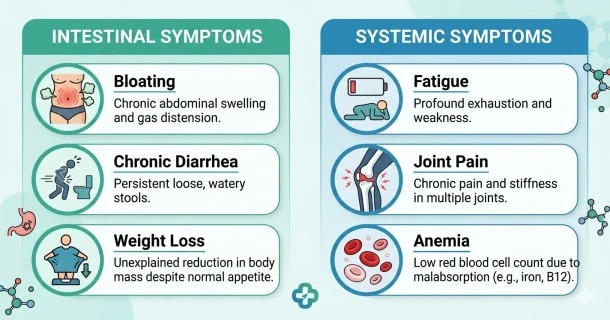
Classic digestive symptoms are driven by direct inflammation of the small bowel and the resulting malabsorption of food. These signs are most frequently seen in infants and young children, but many adults experience them as well:
- Chronic Diarrhea: Persistent loose, watery stools that do not resolve with standard dietary adjustments.
- Steatorrhea (Greasy Stools): Stools that appear pale, bulky, uncharacteristically foul-smelling, and float in the toilet due to unabsorbed dietary fats.
- Abdominal Pain and Bloating: Pervasive gas, distension, and painful cramping that typically worsen shortly after consuming meals containing wheat, rye, or barley.
- Unexplained Weight Loss: Drastic drop in weight despite maintaining a normal or increased appetite, caused by the body's inability to extract calories from food.
2. Systemic and Extraintestinal Symptoms (Adult Presentation)
In adults, celiac disease frequently presents with non-digestive symptoms. These extraintestinal signs are caused by chronic nutrient deficiencies or widespread, systemic autoimmune inflammation:
- Iron-Deficiency Anemia: Persistent low red blood cell counts that remain unresponsive to oral iron supplements, caused by damage to the duodenum where iron is primarily absorbed.
- Chronic Fatigue and Weakness: Profound, ongoing exhaustion linked directly to systemic inflammation and poor absorption of B vitamins and essential minerals.
- Bone and Joint Complications: Early-onset osteoporosis, osteopenia, or chronic joint and muscle pain resulting from a long-term lack of calcium and Vitamin D absorption.
- Neurological Indicators: Frequent migraines, peripheral neuropathy (unexplained tingling, numbness, or burning sensations in the hands and feet), and "brain fog."
- Aphthous Stomatitis: Recurrent, painful canker sores developing inside the mouth.
3. Dermatological Symptoms: Dermatitis Herpetiformis
Dermatitis herpetiformis is the specific skin manifestation of celiac disease.
- Appearance: It presents as an intensely itchy, blistering skin rash that typically develops symmetrically on the elbows, knees, buttocks, scalp, or lower back.
- Clinical Significance: Often referred to as "celiac disease of the skin," a biopsy confirming dermatitis herpetiformis is considered definitive proof of celiac disease, as the same intestinal sensitivity to gluten drives both conditions.
4. Pediatric Checklist: Symptoms in Infants and Children
In pediatric patients, celiac disease can permanently impair physical and cognitive development if left untreated. Parents and pediatricians should look out for:
- Failure to Thrive: A medical term for infants or children who fail to gain weight or grow at expected developmental rates.
- Short Stature: Delayed linear growth and bone maturation due to severe malnutrition during critical growth windows.
- Dental Enamel Defects: Permanent discoloration (yellow, brown, or white spots) or structural ridges on the permanent teeth.
- Irritability and Behavioral Changes: Chronic mood alterations, learning difficulties, or intense irritability driven by nutritional deficits.
Frequently Asked Questions (FAQs)
What are the earliest signs of celiac disease?
The earliest signs vary by individual but often begin with persistent abdominal bloating, uncharacteristic fatigue, iron deficiency that doesn't improve with supplements, or unexplained changes in bowel movements after eating foods containing gluten.
Can you have celiac disease without experiencing diarrhea or stomach pain?
Yes. This is known as atypical or "silent" celiac disease. Many individuals experience no gastrointestinal distress at all, presenting instead with systemic symptoms like chronic fatigue, severe anemia, bone loss, or unexplained neurological issues.
What does a celiac disease rash look like?
The celiac skin rash, called dermatitis herpetiformis, consists of clusters of intensely itchy, burning bumps and fluid-filled blisters. It typically appears symmetrically on both sides of the body, most commonly on the elbows, knees, and buttocks.
Why does celiac disease cause tingling in the hands and feet?
The autoimmune reaction can cause peripheral neuropathy. This neurological symptom is often caused by chronic malabsorption of vital nerve-supporting nutrients, particularly Vitamin B12 and Vitamin E, as well as systemic autoantibody activity.
Do celiac symptoms disappear immediately after cutting out gluten?
No. While some individuals notice a mild improvement in digestive comfort within a few days, it typically takes several weeks for systemic inflammation to decline and several months to years for the small intestinal villi to completely heal.