
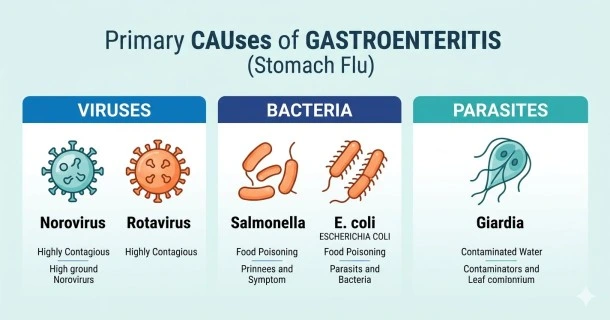
Discover the primary causes of gastroenteritis. Learn how viral, bacterial, and parasitic infections trigger stomach inflammation and how these pathogens spread.
What Causes Gastroenteritis?
Gastroenteritis is primarily caused by an infection of the gastrointestinal tract by viruses, bacteria, or parasites. These microorganisms trigger acute inflammation in the lining of the stomach and intestines, resulting in the classic symptoms of a "stomach bug." While infectious pathogens are responsible for the vast majority of cases, chemical toxins and adverse medication reactions can also irritate the digestive system.
Understanding the precise source of intestinal inflammation is crucial for determining how long the illness will last and whether medical intervention is required.
1. Viral Gastroenteritis (The "Stomach Flu")
Viruses are the most frequent cause of acute gastroenteritis worldwide, responsible for roughly 60% of all recorded cases. These viral agents are highly contagious and spread quickly in close-quarters environments.
- Norovirus: The leading cause of viral gastroenteritis globally for both adults and children. It is highly resilient, resists many common disinfectants, and routinely spreads through cruise ships, schools, and contaminated seafood.
- Rotavirus: The most common cause of severe diarrhea in infants and young children worldwide. Transmission occurs easily when children touch contaminated toys or objects and then put their fingers in their mouths.
- Adenovirus and Astrovirus: Less common viral strains that primarily affect toddlers and young children, often causing mild but prolonged diarrheal symptoms.
2. Bacterial Gastroenteritis (Food Poisoning)
Bacterial infections typically occur after ingesting food or water contaminated by bacteria or the toxins they produce. Bacterial gastroenteritis often presents with more severe localized pain and higher fevers than viral versions.
- Salmonella and Campylobacter: Often contracted by consuming undercooked poultry, unpasteurized milk, or eggs contaminated by animal feces.
- Escherichia coli (E. coli): Certain strains, such as Shiga toxin-producing E. coli, cause severe intestinal injury and are often linked to undercooked ground beef or contaminated raw produce.
- Shigella: Highly contagious bacteria that spread rapidly via the fecal-oral route, particularly in daycare settings.
3. Parasitic Gastroenteritis
Parasites cause a smaller percentage of gastroenteritis cases, but they frequently lead to subacute or chronic, long-term diarrhea.
- Giardia lamblia: A microscopic parasite commonly found in wilderness streams, lakes, or poorly treated municipal water supplies. It causes prolonged bloating, gas, and greasy stools.
- Cryptosporidium: A hardy parasite protected by an outer shell that allows it to survive outside the body for long periods, making it highly resistant to chlorine bleach in swimming pools.
4. Non-Infectious and Chemical Causes
Not all stomach inflammation is caused by a living organism. Non-infectious gastroenteritis can stem from:
- Chemical Contaminants: Ingesting heavy metals, seafood toxins (like ciguatera), or wild mushroom toxins.
- Medications: Adverse reactions to regular heavy doses of NSAIDs (ibuprofen), colchicine, or certain broad-spectrum antibiotics that disrupt healthy gut flora.
How Pathogens Spread: Modes of Transmission
Infectious gastroenteritis pathogens are opportunistic and travel easily via:
- The Fecal-Oral Route: Microscopic amounts of fecal matter from an infected person entering another person's mouth due to poor hand hygiene.
- Contaminated Food and Water: Irrigation with contaminated water or improper food handling by infected individuals.
- Aerosolized Droplets: Norovirus can occasionally become airborne during episodes of forceful vomiting, contaminating nearby surfaces.
Frequently Asked Questions (FAQs)
What is the most common cause of gastroenteritis?
Norovirus is the single most common cause of viral gastroenteritis, responsible for the majority of outbreaks in adults and foodborne illnesses worldwide.
How do you catch bacterial gastroenteritis?
Bacterial gastroenteritis is typically caught by ingesting food or water that has been contaminated by animal or human feces, or by eating raw or undercooked meats, eggs, and unpasteurized dairy.
Can antibiotics cause gastroenteritis?
Yes. Certain broad-spectrum antibiotics can alter the delicate balance of beneficial bacteria in your gut microbiome, triggering non-infectious diarrhea and stomach irritation.
Is there a vaccine for gastroenteritis?
There is an oral vaccine available specifically for Rotavirus, which is routinely administered to infants to prevent severe, life-threatening diarrhea. There are currently no widespread vaccines for Norovirus or most bacterial causes.
How long do parasites that cause gastroenteritis stay in water?
Hardy parasites like Cryptosporidium have protective outer shells that allow them to survive in chlorinated recreational pools or open freshwater sources for several days to weeks.