
Why does the stomach empty too fast? Discover the leading causes of dumping syndrome, including bariatric surgery, vagus nerve damage, and diabetes.
Rapid Gastric Emptying Causes: Why Food Leaves the Stomach Too Fast
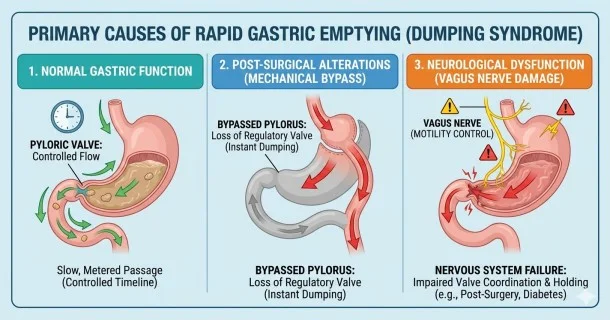
Understanding rapid gastric emptying causes requires looking closely at how the stomach controls the passage of food. In a healthy digestive system, the stomach does not simply dump its contents directly into the intestines. Instead, it acts as a reservoir, grinding food down and releasing it in small, metered amounts into the small intestine (the duodenum).
This careful transit timeline relies on a functioning pyloric sphincter (the muscular valve at the bottom of the stomach) and coordinated nerve signals from the vagus nerve. When these structural mechanisms or neurological pathways are damaged, bypassed, or altered, Dumping Syndrome occurs.
1. Post-Surgical Causes (Anatomical Alterations)
The absolute leading cause of rapid gastric emptying is prior surgery involving the upper gastrointestinal tract. These procedures often permanently alter stomach capacity, remove the pyloric valve, or destroy the nerve pathways that tell the stomach when to hold food.
Bariatric (Weight Loss) Surgeries
Weight loss procedures are among the most common modern drivers of dumping syndrome:
- Roux-en-Y Gastric Bypass: This surgery creates a small stomach pouch and connects it directly to the jejunum, completely bypassing the duodenum and the pyloric sphincter. Without a valve to regulate flow, food "dumps" directly into the lower intestine.
- Sleeve Gastrectomy: Removing a large portion of the stomach reduces its reservoir capacity. The increased pressure within the remaining narrow gastric tube can force food through the pylorus much faster than normal.
Gastric and Esophageal Cancer Surgeries
Treating severe ulcers, tumors, or malignancies often requires removing portions of the digestive tract:
- Partial or Total Gastrectomy: Removing all or part of the stomach naturally eliminates the reservoir zone.
- Pyloroplasty: A surgical procedure that widens the pyloric sphincter to allow food to pass more easily, which can accidentally result in unmetered, accelerated emptying.
2. Neurological Causes (Vagus Nerve Damage)
Digestion is heavily regulated by the autonomic nervous system. The vagus nerve is the primary highway carrying signals between the brain and the stomach, telling the gastric muscles when to contract and relax.
- Vagotomy: Historically used to treat severe peptic ulcer disease by cutting parts of the vagus nerve to reduce stomach acid production. A side effect of this procedure is that it paralyzes the stomach's ability to relax and store food, causing it to empty prematurely.
- Surgical Trauma: The vagus nerve runs directly along the esophagus and stomach. During complex chest or upper abdominal surgeries, these delicate nerve fibers can be accidentally stretched or severed, disrupting stomach motility.
3. Non-Surgical Risk Factors and Underlying Conditions
While post-operative anatomical changes account for the vast majority of cases, rapid gastric emptying can sometimes develop in individuals who have never undergone surgery. This is often driven by systematic diseases that alter nerve health or gut hormone balances.
- Diabetes Mellitus: Chronic high blood sugar can damage small blood vessels that supply the body's nerves. While this nerve damage frequently causes delayed stomach emptying (gastroparesis), in some patients, it can damage the specific vagus nerve branches responsible for holding food, resulting in accelerated transit.
- Zollinger-Ellison Syndrome: A rare condition where tumors cause the stomach to produce extreme amounts of gastric acid. This intense acidity can overwhelm the duodenum and hyper-stimulate intestinal motility, forcing food through rapidly.
- Exocrine Pancreatic Insufficiency (EPI): A lack of digestive enzymes can alter the chemical signaling between the small intestine and the stomach, occasionally disrupting the feedback loop that tells the stomach to slow down.
- Idiopathic Rapid Gastric Emptying: In a small percentage of patients, the stomach empties too fast without any identifiable surgical, mechanical, or systemic cause.
Key Risk Factors: What Makes Symptoms Worse?
While an underlying condition or surgery creates the physical environment for rapid gastric emptying, certain dietary and lifestyle factors dramatically increase your risk of triggering an active flare-up:
- Consuming Simple Carbohydrates: Refined sugars, sodas, juices, candies, and white flour digest rapidly and create severe osmotic shifts in the intestines.
- Co-Consuming Liquids and Solids: Drinking large volumes of water, soda, or tea during a meal washes food out of the stomach pouch prematurely.
- Eating Too Rapidly: Failing to chew thoroughly increases the volume of large food particles hitting the intestines all at once, worsening early phase distress.
Frequently Asked Questions (FAQ)
Why does gastric bypass surgery so frequently cause rapid gastric emptying?
During a Roux-en-Y gastric bypass, the surgeon cuts away the lower portion of the stomach, including the pyloric sphincter, which is the body's natural regulatory valve. The newly created, small stomach pouch is stitched directly to the middle section of the small intestine. Because there is no longer a muscular valve to hold food back, meals empty directly into the intestines within minutes of swallowing.
Can stress or anxiety cause the stomach to empty too fast?
Acute psychological stress and panic can alter global gastrointestinal motility via the brain-gut axis, often causing temporary spasms or rapid intestinal transit. However, stress alone does not cause clinical Dumping Syndrome. True dumping syndrome requires an underlying structural change, mechanical valve failure, or metabolic nerve damage to cause chronic, accelerated stomach emptying.
How does diabetes contribute to non-surgical rapid gastric emptying?
Long-term diabetes can lead to autonomic neuropathy, a type of nerve damage affecting involuntary bodily functions. If this neuropathy targets the specific branches of the vagus nerve that control gastric storage and accommodation, the stomach loses its ability to hold food normally. This can cause the stomach muscles to drop food into the duodenum prematurely.