
Explore treatment options for rapid gastric emptying (dumping syndrome). Learn about the 30-minute fluid separation rule, recovery diets, and octreotide protocols.
Rapid Gastric Emptying Treatment: Diet & Medical Protocols
Successfully managing rapid gastric emptying treatment requires a coordinated approach that balances specialized dietary modifications with target pharmacological options. Because Dumping Syndrome alters how food moves into the small intestine, treatment plans focus on slowing down stomach transit times, preventing rapid osmotic fluid shifts, and stabilizing blood sugar levels.
For a vast majority of individuals, consistent lifestyle and dietary adjustments are enough to control symptoms. However, if structural or post-surgical changes cause severe, persistent distress, prescription medical interventions may be added under a gastroenterologist's supervision.
1. Dietary Management (The Core Treatment Strategy)
Dietary modification is the foundational cornerstone of treating rapid gastric emptying. Changing how, what, and when you eat can naturally restore balance to your digestive timeline.
The 30-Minute Fluid Separation Rule
- The Mechanism: Consuming beverages alongside solid foods liquefies the meal and lowers its overall density, allowing it to easily slip through the pyloric valve at an accelerated rate.
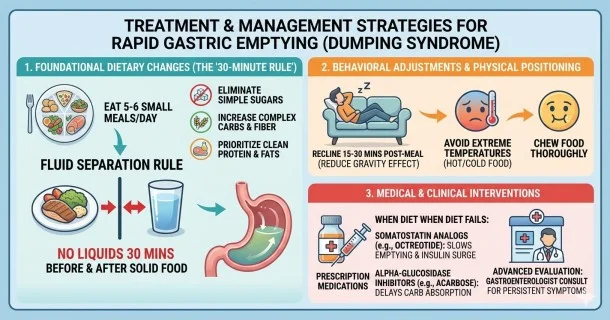
- The Protocol: Strictly avoid drinking liquids for 30 minutes before and 30 minutes after eating solid meals. Fluid intake should occur in small quantities between your scheduled meals.
Nutritional Composition and Adjustments
To prevent rapid sugar absorption and sudden intestinal fluid shifts, structure your daily meals around specific macronutrient rules:
- Eliminate Simple Sugars: Avoid foods rich in refined sugars, such as soda, juices, candy, syrups, pastries, and white flour. These high-osmotic items draw water rapidly into the gut.
- Increase Complex Carbohydrates and Fiber: Incorporate foods high in soluble fiber, such as oatmeal, lentils, and specific vegetables. Soluble fiber mixes with water to form a gel-like consistency, naturally delaying stomach transit.
- Prioritize Lean Protein and Healthy Fats: Ensure every meal contains clean protein (eggs, poultry, fish, tofu) or healthy fats (avocado, olive oil, nut butters). These macronutrients take longer to digest, helping to slow down global gastric motility.
- Meal Portion Modification: Divide your nutritional intake into 5 to 6 small meals spaced throughout the day instead of three large portions. Smaller food volumes put less pressure on the gastric reservoir.
2. Behavioral Adjustments to Prevent Drops
- Post-Meal Recumbency (Reclining): If you experience severe early dumping symptoms or sudden lightheadedness, try lying down flat on your back or reclining at a 45-degree angle for 15 to 30 minutes immediately after eating. This positioning reduces the gravitational pull on food, helping to slow down its physical transit into the duodenum.
- Temperature Stabilization: Avoid consuming meals or beverages that are extremely hot or ice-cold, as extreme temperatures can over-stimulate gastric contractions and accelerate emptying. Chew all food thoroughly to assist mechanical digestion.
3. Pharmacological Treatments (Prescription Protocols)
When strict dietary alterations do not provide sufficient relief, gastroenterologists introduce targeted prescription medications to slow down digestion.
Somatostatin Analogs (Octreotide Therapy)
- How It Works: Octreotide is a synthetic version of somatostatin, a natural hormone in the body. It works by slowing down gastric emptying, delaying transit through the small intestine, and inhibiting the excessive release of insulin from the pancreas.
- Administration: It is typically administered via short-acting subcutaneous injections before meals or through a long-acting, monthly intramuscular injection (Octreotide LAR).
- Side Effects: Long-term use can alter fat digestion, potentially leading to loose, fatty stools (steatorrhea) or an increased risk of developing gallstones.
Alpha-Glucosidase Inhibitors (Acarbose)
- How It Works: Acarbose is an oral medication that delays the digestion and absorption of carbohydrates in the small intestine. By smoothing out the post-meal glucose curve, it prevents the massive insulin surge responsible for late-stage reactive hypoglycemia.
- Clinical Monitoring: Doctors regularly check liver enzymes during treatment, as long-term use can occasionally cause mild liver irritation.
4. Advanced Clinical & Surgical Interventions
In rare, severe cases where both aggressive dietary management and prescription drugs fail, and the patient experiences severe, unintended weight loss or frequent fainting, advanced options are evaluated:
- Continuous Enteral Feeding: Bypassing oral eating by placing a specialized feeding tube (jejunostomy tube) to deliver nutrients slowly and continuously into the intestine overnight.
- Reconstructive Surgery: If dumping syndrome is driven by a prior bariatric procedure, surgeons may look into anatomical revisions, such as converting a Roux-en-Y layout or narrowing an overly wide surgical connection (stoma).
Critical Clinical Safety RemindersInfant and Pediatric Management
Never attempt to calculate or adjust dietary restrictions or medical supplements for infants or young children at home without direct pediatric supervision. Pediatric rapid gastric emptying can quickly lead to severe caloric deficits, growth stunting, or dangerous electrolyte imbalances. All treatment pathways for children must be strictly monitored by a pediatric gastroenterologist.
Herb and Thickener Safety
While some patients use over-the-counter thickening agents (like pectin or guar gum) or herbal supplements to help add density to their meals, these options must be confirmed by a specialist. Unregulated herbal supplements can alter the absorption of your essential prescription medications. Always review any new addition with your primary care provider to protect your safety.
Frequently Asked Questions (FAQ)
How does the 30-minute fluid separation rule help treat rapid gastric emptying?
When you drink liquids during a meal, they rapidly mix with solid food, reducing the viscosity and density of the stomach contents. This allows the liquefied meal to easily wash through the stomach and dump into the small intestine all at once. Separating fluids from solids by 30 minutes keeps food in a thicker, solid state, forcing the stomach to hold and process it for a longer period.
What is the medication octreotide, and how does it stop dumping syndrome?
Octreotide is a prescription somatostatin analog that mimics a natural hormone in the body. It treats dumping syndrome by slowing down stomach emptying, slowing intestinal transit, and narrowing blood vessels in the abdomen to prevent blood pressure drops. Additionally, it helps stop late dumping by suppressing the pancreas from releasing excessive, sudden bursts of insulin.
Why is lying down after a meal recommended for some dumping syndrome patients?
Reclining or lying down flat on your back for 15 to 30 minutes immediately after eating removes the natural force of gravity from your digestive tract. This physical positioning physically slows the movement of food out of your stomach pouch and into the duodenum, which can significantly reduce early phase symptoms like bloating, cramping, and lightheadedness.