
Can acupressure help manage GERD and heartburn? Explore 5 evidence-based pressure points, lifestyle tips, and clinical treatments for acid reflux relief.
Acupressure for GERD: 5 Pressure Points for Acid Reflux Relief
If you experience chronic heartburn, regurgitation, or chest discomfort, you might be looking for complementary ways to find relief. While gastroesophageal reflux disease (GERD) requires medical management, traditional therapies like acupressure are increasingly being explored alongside conventional care to help soothe digestive discomfort.
Understanding Acid Reflux and Its Causes
Acid reflux happens when stomach acid flows back up into the tube connecting your mouth and stomach (esophagus). If you experience persistent symptoms, they are most frequently consistent with Gastroesophageal Reflux Disease (GERD). However, other conditions can cause highly similar symptoms, making an accurate medical evaluation crucial.
Potential Underlying Causes
- Gastroesophageal Reflux Disease (GERD): Chronic digestive disease where stomach acid or bile irritates the food pipe lining.
- Gastritis: Inflammation of the stomach lining that can cause upper abdominal pain, nausea, and mimicking reflux sensations.
- Esophageal Motility Disorders: Conditions like achalasia or esophageal spasms that disrupt how food moves down the esophagus, causing chest pain or swallowing difficulties.
Management and Treatment Options
Managing chronic acid reflux typically requires a multi-faceted approach to reduce esophageal irritation and improve digestive function.
- Complementary Therapies (Acupressure & Acupuncture): Emerging clinical research suggests that stimulating specific points may help modulate gastrointestinal motility and reduce transient lower esophageal sphincter relaxations (TLESRs).
- Lifestyle and Dietary Modifications: Avoiding trigger foods (like caffeine, fatty foods, and citrus), eating smaller meals, maintaining an upright posture after eating, and elevating the head of your bed can significantly lessen symptom frequency.
- Medical and Over-the-Counter (OTC) Therapies: Antacids provide rapid, short-term neutralization of stomach acid. For longer-term control, H2 blockers or proton pump inhibitors (PPIs) may be recommended by a physician to reduce acid production.
5 Acupressure Points That May Help Relieve GERD Symptoms
Acupressure involves applying firm, physical pressure to specific meridian points on the body. Preliminary clinical studies indicate that acupuncture and acupressure may help alleviate symptoms by altering acid secretion and improving lower esophageal sphincter function.
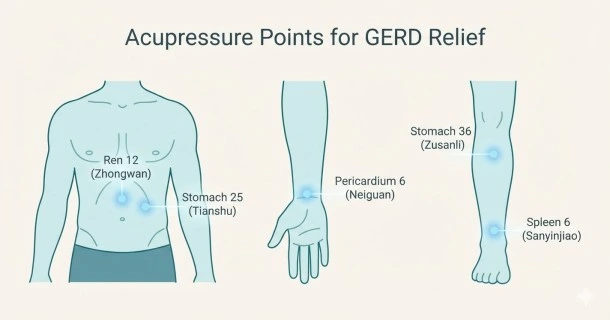
1. Ren 12 — Zhongwan (Middle Epigastrium)
- Location: Located on the midline of the abdomen, approximately 4 inches (four cun) directly above the belly button (umbilicus).
- Purpose: In traditional practices, this point is thought to harmonize the stomach and spleen. It is frequently utilized to help soothe epigastric pain, bloating, nausea, and acid regurgitation.
2. Stomach 36 — Zusanli (Leg Three Miles)
- Location: Located on the outer side of the lower leg, about 3 inches (three cun) below the kneecap, and one finger-breadth away from the shinbone.
- Purpose: Believed to support overall digestive energy (Qi), this point is commonly stimulated to manage gastric discomfort, indigestion, vomiting, and abdominal fullness.
3. Pericardium 6 — Neiguan (Inner Gate)
- Location: Situated on the inner wrist, about 2 inches (two cun) up from the wrist crease, tucked directly between the two prominent tendons.
- Purpose: Clinical evidence suggests that electrical stimulation at this point may help inhibit transient lower esophageal sphincter relaxations, which are a primary mechanism behind acid reflux. It is widely used to combat nausea, vomiting, and hiccups.
4. Spleen 6 — Sanyinjiao (Three Yin Intersection)
- Location: Located on the inner lower leg, about 3 inches (three cun) above the tip of the inner ankle bone, just behind the shinbone.
- Purpose: This point is targeted to help resolve dampness and regulate the digestive organs. Note: Avoid applying deep pressure to this point during pregnancy.
5. Stomach 25 — Tianshu (Celestial Pivot)
- Location: Positioned on the abdomen, about 2 inches (two cun) horizontally out from both sides of the belly button.
- Purpose: Often stimulated to regulate the stomach and intestines, it is thought to relieve abdominal pain, bloating, gas, and irregular bowel movements.
How to Perform Acupressure Safely
- Find a comfortable position: Sit or lie down in a quiet, relaxing environment and take a few deep breaths.
- Apply steady pressure: Use your thumb, index finger, or knuckles to apply deep, firm pressure to the selected point.
- Massage gently: Massage the point in small circular motions for 1 to 2 minutes.
- Listen to your body: The pressure should feel firm but never sharply painful. You can repeat this process a few times a day as needed.
Frequently Asked Questions (FAQs)
Can acupressure cure GERD completely?
No, acupressure is not a standalone cure for GERD. It serves as a complementary home remedy that may help manage and soothe mild symptoms alongside medical treatment and lifestyle adjustments.
How quickly does acupressure work for heartburn?
Some individuals report feeling mild relief from nausea or bloating within a few minutes of stimulating points like Pericardium 6 (Neiguan). However, long-term symptom management requires consistent application alongside a doctor's care plan.
Is acupressure safe for everyone?
Acupressure is generally safe for most people when performed correctly using gentle, firm pressure. However, certain points (such as Spleen 6) must be avoided during pregnancy. If you have underlying health conditions, chronic illnesses, or local skin infections, consult your healthcare provider before trying acupressure.