
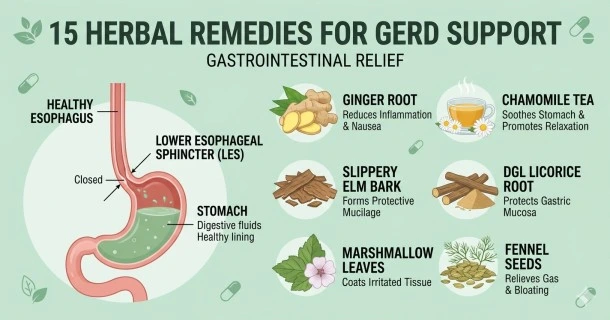
Explore 15 evidence-based herbal remedies for GERD and heartburn. Learn how DGL, slippery elm, and ginger soothe acid reflux and support digestive health.
15 Herbal Remedies for GERD: Evidence-Based Support for Acid Reflux
Managing Gastroesophageal Reflux Disease (GERD) often involves a combination of dietary adjustments and medical therapies. While conventional acid suppressants provide reliable relief, many individuals look to traditional herbal remedies as complementary options.
While herbs do not offer an immediate or permanent "cure," certain botanical compounds can help soothe esophageal tissue, optimize gastric emptying, and reduce inflammation. Below is a breakdown of 15 herbs historically used for digestive health, evaluated through a modern clinical lens.
Mucilaginous Herbs (Esophageal Protectors)
These herbs act as natural demulcents. They contain complex sugars called mucilage that swell in water to form a viscous gel, coating and protecting the irritated lining of the esophagus against stomach acid.
- Deglycyrrhizinated Licorice (DGL): DGL stimulates the body's natural protective mechanisms in the stomach and esophagus by increasing mucus production. Standard licorice can raise blood pressure, but the deglycyrrhizinated form (DGL) removes this compound, making it a safe choice before meals.
- Slippery Elm: Slippery elm bark contains rich mucilage contents. When mixed with water or chewed as a tablet, it forms a mechanical barrier that shields esophageal tissues from acidic reflux attacks.
- Marshmallow Root: Mirroring slippery elm, marshmallow root produces a thick gel coating. It is highly effective at easing the acute "burning chest" sensation of severe heartburn.
- Fenugreek Seed: Fenugreek seeds contain a high concentration of mucilaginous fiber. When consumed, they provide an internal soothing layer that calms gastric inflammation (gastritis).
Herbs that Support Gastric Motility and Digestion
Delayed stomach emptying can build internal pressure, forcing the lower esophageal sphincter (LES) open. These herbs help accelerate digestion and eliminate trapped gas.
- Ginger: Ginger is a powerful prokinetic agent that helps the stomach empty faster, reducing the volume of contents available to reflux. Its active compound, gingerol, also offers potent anti-inflammatory benefits. Use moderate doses, as excess ginger can occasionally trigger minor heartburn.
- Fennel: Popularized as a post-meal digestive aid, fennel seeds contain volatile oils that act as mild antispasmodics. They relax intestinal smooth muscles, allowing trapped gas to dissipate and reducing intra-abdominal pressure.
- Cumin: Cumin stimulates the secretion of digestive enzymes and bile, promoting the smooth breakdown of food components. Efficient digestion prevents prolonged gastric retention.
- Parsley: Packed with dietary minerals and carminative properties, parsley supports baseline kidney function and helps expel trapped gas, thereby minimizing abdominal bloating and upward stomach pressure.
Anti-Inflammatory and Soothing Botanicals
These plants minimize systemic stress and reduce localized tissue irritation throughout the gastrointestinal tract.
- Chamomile: Sipping a warm cup of pure chamomile tea before bed serves dual purposes: it acts as a mild localized anti-inflammatory for the GI tract and dampens stress-induced reflux flare-ups.
- Turmeric: Curcumin, the primary active agent in turmeric, is a well-studied antioxidant and anti-inflammatory compound that protects the esophageal mucosa from long-term cellular damage caused by bile and acid exposure.
- Calendula: Historically utilized across Europe, calendula possesses tissue-healing and vulnerable properties that help ease the burning irritation associated with mild gastritis and low-grade esophagitis.
- Catnip: Beyond its calming properties, catnip functions as a mild bitter herb that settles nervous stomachs and mitigates intestinal spasms that lead to backward acid flow.
Herbs for Broader Digestive Support
These botanicals provide auxiliary support for the liver, gallbladder, and digestive tissues to maintain regular metabolic flow.
- Aloe Vera Inner Leaf Gel: Pure inner-leaf aloe vera juice acts as an anti-inflammatory agent that can soothe an irritated gastrointestinal tract. Note: Ensure your supplement is "decolorized" and free of aloin, which acts as a harsh laxative.
- Papaya Leaf: Papaya leaves contain proteolytic enzymes like papain and protease. These assist your stomach in breaking down dense proteins efficiently, reducing digestive strain.
- Milk Thistle: While it does not directly alter stomach acid, milk thistle contains silymarin, which supports liver function and bile regulation. Proper bile flow is crucial for breaking down dietary fats seamlessly.
Frequently Asked Questions (FAQ)
Which herb is most effective for immediate heartburn relief?
Mucilaginous herbs like Slippery Elm and Marshmallow Root provide the fastest relief. They work by creating a physical gel barrier that immediately coats and insulates the raw, irritated lining of your esophagus from ascending stomach acid.
Can I take herbal remedies alongside prescription GERD medications?
Many herbs complement standard medical treatments well. However, mucilaginous herbs (like slippery elm or marshmallow) can bind to and reduce the absorption of oral medications. Always take demulcent herbs at least one to two hours apart from your regular prescription drugs.
Is peppermint oil good for acid reflux?
No. While peppermint oil is highly beneficial for lower digestive issues like Irritable Bowel Syndrome (IBS), it must be avoided for upper GI issues like GERD. Peppermint relaxes smooth muscles, including the lower esophageal sphincter (LES), which allows stomach acid to escape upward into the esophagus and worsen heartburn.
What is the safest way to consume ginger for GERD?
The safest way to consume ginger is to steep small slices of fresh ginger root in warm water to create a mild tea. Avoid highly concentrated commercial ginger candies or extracts, as excessive doses can trigger localized warmth and mimic a burning reflux sensation.