
Explore what causes gastric bezoars. Learn how low stomach acid, gastroparesis, and swallowing indigestible plant fiber or hair create stomach masses.
Bezoar Causes: How Do Stomach Blockages Form?
A bezoar develops when substances that cannot be broken down by human gastric juices accumulate in the stomach cavity and stick together into a solid, trapped mass. Rather than happening purely by chance, these gastrointestinal blockages are almost always caused by a combination of ingesting indigestible materials and suffering from an underlying medical condition that impairs normal stomach digestion or motility.
The Primary Biological Mechanisms
For a bezoar to take root in the stomach, one or both of the following physiological failures typically occur:
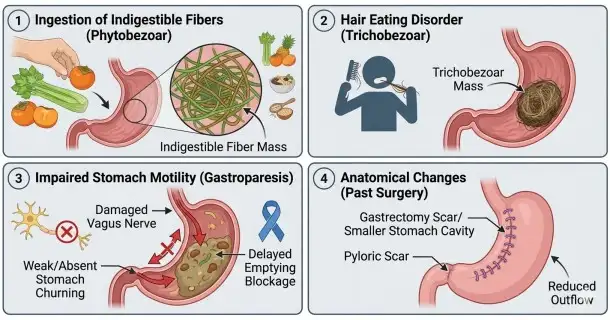
1. Ingestion of Indigestible Foreign Materials
The body cannot pass or digest certain materials. The physical traits of what is swallowed dictate the type of mass that forms:
- Indigestible Plant Cellulose (Phytobezoars): Plant fibers, skins, seeds, and cellulose found in heavy raw vegetable or fruit diets cannot be dissolved by stomach enzymes.
- Human Hair and Synthetic Fibers (Trichobezoars): Hair consists of keratin, a tough protein that completely resists gastric juices. When hair is continuously swallowed—often due to psychiatric hair-eating conditions—the constant churning of the stomach rolls it into a tight, impossible-to-digest ball.
2. Impaired Gastric Motility and Secretions
A healthy stomach continuously uses acid to liquefy food and muscular contractions to push contents into the intestines. When this system fails, fragments sit stagnant and bind together:
- Delayed Stomach Emptying (Gastroparesis): If the stomach muscles are weak or paralyzed, food remains in the gastric cavity too long, providing the perfect window for fibers to tangle into a solid mass. This is highly common in individuals with advanced diabetes or end-stage kidney disease.
- Low Stomach Acid Production (Hypochlorhydria): Inadequate production of hydrochloric acid severely impairs the stomach's ability to soften tough plant tissue, causing dense cellular fibers to pass into the stomach unaltered.
- Anatomical Changes from Surgery: Past procedures like a partial gastrectomy (stomach reduction) or a vagotomy (cutting the vagus nerve to treat ulcers) alter gastric churning patterns, leaving behind a smaller cavity or weak contractions that cause mass build-ups.
Frequently Asked Questions (FAQs)
Can a high-fiber healthy diet cause a phytobezoar?
In a healthy person with normal stomach motility and strong stomach acid, a high-fiber diet will not cause a bezoar. However, if an individual has underlying issues like delayed stomach emptying or low acid production, eating large amounts of tough, fibrous fruits and vegetables can lead to a mass because the stomach cannot break down the fiber.
How does diabetes directly cause a stomach bezoar?
Long-term, uncontrolled diabetes can damage the vagus nerve, which controls how the stomach muscles contract. This nerve damage leads to a condition called gastroparesis (delayed stomach emptying). Because the stomach cannot pump food out quickly enough, food particles sit stagnant for hours or days, tangling together to form a phytobezoar mass.
What psychological condition causes hair bezoars in humans?
Hair bezoars (trichobezoars) are usually caused by two closely linked psychological conditions: trichotillomania (an impulse-control disorder where an individual compulsively pulls out their own hair) and trichophagia (the compulsive eating of that pulled hair). Because human hair cannot be digested, it aggregates into a large mass over time.
Why does previous stomach surgery increase the risk of bezoars?
Stomach surgeries, such as gastric bypass or ulcer operations, often alter the stomach's natural shape, reduce its physical size, or damage the nerves responsible for churning food. This structural disruption impairs mechanical digestion, allowing undigested materials to collect at the bottom of the stomach rather than passing into the intestines.