
Discover how to identify gastric bezoar symptoms. Learn about early fullness, nausea, foul breath, and complications like stomach ulcers.
Bezoar Symptoms: Recognizing the Signs of a Gastric Mass
Because a bezoar takes up physical space within the digestive tract, its symptoms resemble those of a slow-growing stomach blockage. While very small masses may remain completely unnoticed, larger or expanding bezoars will disrupt normal digestion and damage the stomach lining over time.
Common Gastric Bezoar Symptoms
When a compacted mass develops in the stomach cavity, it prevents food from passing smoothly into the small intestine and triggers several key indicators:
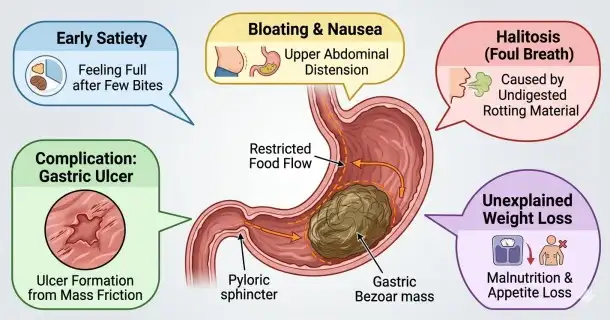
- Early Satiety (Early Fullness): This is one of the most prominent signs. Because the mass physically occupies a large portion of the stomach cavity, you will feel completely full, stuffed, or unable to consume more food after eating only a few bites of a meal.
- Chronic Nausea and Vomiting: As food struggles to squeeze past the obstruction, the stomach's internal pressure builds, leading to persistent nausea or the vomiting of partially digested food particles.
- Abdominal Bloating and Cramping: Trapped food and gas behind the mass lead to noticeable upper abdominal distension, severe bloating, general stomach upset, and deep cramping discomfort.
- Halitosis (Foul Breath): When plant fibers (phytobezoars) or hair (trichobezoars) rot inside the warm gastric cavity over weeks or months, it causes a distinct, severely foul odor to escape through the mouth.
- Unexplained Weight Loss: Due to a persistent loss of appetite, fear of eating due to discomfort, and early fullness, progressive weight loss and malnutrition are common.
Advanced Complications and Severe Signs
If a gastric bezoar is left untreated, it can cause severe internal tissue damage that requires immediate medical evaluation:
- Gastric Ulcer Formation: The heavy, dense mass constantly rubs and grinds against the delicate mucosal lining of the stomach. This friction strips away the protective mucus, leading to the formation of painful gastric ulcers.
- Gastrointestinal Bleeding: If a friction ulcer ruptures an underlying blood vessel, it causes internal bleeding. This can present as a dark, tarry stool (blood in the stool) or dark, coffee-ground-textured vomit.
- Abdominal Tenderness and Fever: A severely inflamed stomach wall or an ulcer on the verge of perforation will make the upper middle abdomen feel highly tender or painful to the touch, sometimes accompanied by a low-grade fever.
Frequently Asked Questions (FAQs)
Why exactly do bezoars cause such foul breath?
Because a bezoar is a trapped mass that cannot be digested or passed into the small intestine, it stays inside the warm environment of the stomach indefinitely. Over time, any food particles caught in the mass begin to slowly ferment and decay, creating a highly foul, pungent sour odor known as halitosis.
Can a stomach bezoar cause sudden diarrhea?
Yes, it can. While a large bezoar mostly causes upper digestive blockages, it can sometimes allow only liquids to seep around the mass and enter the lower intestines, causing paradoxical diarrhea alternating with constipation. If the mass fragments and slips completely into the narrow small bowel, it can trigger a sudden bowel obstruction.
How can a doctor tell if my bloating is from a bezoar or simple indigestion?
Simple indigestion or temporary bloating passes within a few hours or days. A gastric bezoar causes progressive, continuous symptoms like unyielding early fullness every time you attempt to eat. To confirm a diagnosis, a gastroenterologist will order an abdominal imaging scan or use an upper endoscopy camera to visually check the stomach cavity.
Do bezoars always cause severe stomach pain?
No, not initially. In its early stages of formation, a bezoar might only cause mild discomfort, a dull pressure, or early satiety. Severe, sharp pain typically sets in only after the mass grows large enough to cause a complete blockage or rubs against the stomach wall enough to create deep, bleeding gastric ulcers.