
Discover if stomach polyps cause symptoms. Learn about the hidden signs of large gastric polyps, including abdominal pain, occult bleeding, and anemia.
Stomach Polyps Symptoms: Recognizing the Hidden Signs
The vast majority of stomach polyps (gastric polyps) are completely asymptomatic. Because they are typically very small—often measuring less than a few millimeters—they do not cause pain, digestive discomfort, or functional changes in the stomach lining. Most individuals only discover they have them incidentally during an upper endoscopy performed for a completely unrelated reason.
However, if a stomach polyp is allowed to grow large, it can cause distinct and potentially serious clinical symptoms.
Symptoms of Large or Complicated Gastric Polyps
When gastric polyps grow larger (typically exceeding 1 to 2 centimeters in diameter), they disrupt normal gastric function or damage the surrounding mucosa, leading to the following signs:
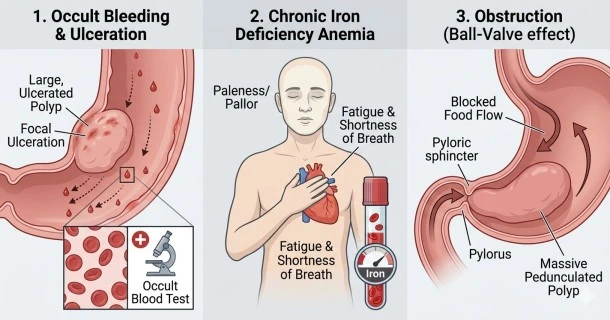
1. Chronic Gastrointestinal Bleeding
As a polyp enlarges, its delicate surface tissue can become irritated by churning stomach acids and passing food.
- Ulceration: This constant friction can cause the surface of the polyp to break down and develop open sores (ulcers).
- Occult Blood: These ulcers can bleed continuously in small, microscopic amounts (occult bleeding). While you may not see bright red blood in your stool or vomit, the persistent blood loss is highly destructive over time.
2. Unexplained Iron Deficiency Anemia
Because of the slow, chronic micro-bleeding described above, the body slowly depletes its iron stores faster than it can replenish them.
- Clinical Presentation: Patients often present to their doctor with standard signs of iron deficiency anemia without realizing a stomach polyp is the root cause.
- Key Symptoms: This includes chronic fatigue, noticeable skin paleness (pallor), dizziness, shortness of breath during light exertion, and a racing heart rate.
3. Abdominal Pain and Tenderness
Can stomach polyps cause physical pain? Yes, but typically only under specific conditions.
- Epigastric Pain: Large polyps can cause a dull, aching pain or localized pressure in the upper middle abdomen (the epigastric region).
- Tenderness to Touch: A doctor or patient may notice localized soreness or physical tenderness when firm pressure is applied directly to the upper stomach area.
4. Gastric Outlet Obstruction (Ball-Valve Syndrome)
In rare clinical scenarios, a massive or elongated polyp growing near the lower portion of the stomach (the antrum) can cause a physical blockage.
- The Mechanism: The polyp can be sucked into the narrow pyloric sphincter channel, acting like a structural plug or "ball-valve."
- The Result: This blocks food from leaving the stomach, triggering sudden nausea, persistent vomiting of undigested food, a feeling of early fullness (early satiety) after taking only a few bites of a meal, and severe bloating.
Frequently Asked Questions (FAQs)
Can a stomach polyp cause sharp stomach pain after eating?
Small stomach polyps do not cause any pain. However, if a polyp grows large enough to block the exit of your stomach or develops an open sore (ulcer) on its surface, it can cause a dull ache, bloating, or physical tenderness in your upper abdomen, especially after consuming a meal.
Why does a stomach polyp cause anemia?
A large stomach polyp can develop a fragile, ulcerated surface due to constant exposure to stomach acid. This ulcerated tissue can bleed slowly and continuously into your digestive tract. Over weeks or months, this chronic blood loss depletes your body's iron stores, leading to iron deficiency anemia.
Will I see blood in my stool if a gastric polyp is bleeding?
Usually, no. Because the bleeding from a stomach polyp is typically very slow and microscopic, it mixes completely with digesting food and goes unnoticed by the naked eye. It is usually caught via a laboratory fecal occult blood test or when investigating the root cause of an unexplained drop in your red blood cell count.
Do stomach polyp symptoms resolve immediately after removal?
Yes. Once a gastroenterologist safely snips away a large or bleeding polyp during an upper endoscopy, the underlying cause of tissue irritation is completely resolved. Micro-bleeding stops immediately, allowing your iron levels to recover, and any associated abdominal fullness or obstruction clears up right away.