
Learn the hallmark symptoms of Ménétrier's disease. Discover how giant gastric folds cause severe abdominal pain, nausea, weight loss, and fluid swelling.
Recognizing Ménétrier’s Disease Symptoms
Because Ménétrier’s disease alters the structural integrity of the stomach lining, its symptoms are often more severe and systemic than standard gastrointestinal issues. While early signs can mimic common digestive disorders, the characteristic overgrowth of foveolar cells and subsequent protein loss soon trigger unique clinical features.
Understanding these signs is crucial for early detection and differentiating this rare condition from other gastric illnesses.
Core Gastrointestinal Symptoms
The physical presence of massive, brain-like folds (cerebriform rugae) inside the stomach directly interferes with normal digestion, leading to several primary localized symptoms:
- Epigastric Pain and Discomfort: Patients frequently report a burning or aching pain in the upper abdomen. This discomfort often worsens 1 to 2 hours after eating as the stomach distends against the thickened, rigid mucosal walls.
- Persistent Nausea and Vomiting: The structural changes alter normal gastric motility. The stomach cannot empty efficiently, leading to chronic nausea and bouts of vomiting.
- Early Satiety and Appetite Loss: Because the giant folds occupy significant volume within the stomach cavity, the actual holding capacity for food is drastically reduced. Patients feel full after consuming only small amounts of food.
- Diarrhea: Alterations in stomach acid production (achlorhydria) and fluid imbalances often lead to chronic, watery diarrhea or steatorrhea (fatty stools).
Systemic Symptoms of Protein-Losing Enteropathy
The most debilitating and distinct symptoms of Ménétrier’s disease do not happen in the stomach itself, but rather throughout the entire body due to protein-losing gastropathy.
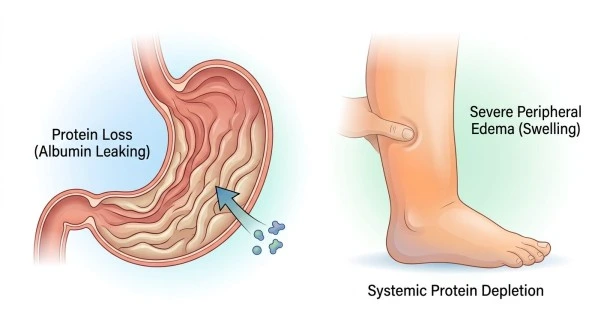
As essential blood proteins—specifically albumin—leak out through the wide cellular junctions of the enlarged gastric folds, the body suffers from severe protein depletion. This causes the following systemic signs:
- Peripheral and Generalized Edema: When blood albumin levels drop dangerously low (hypoalbuminemia), the blood vessels lose the oncotic pressure needed to keep fluids contained. Fluid leaks into surrounding tissues, causing noticeable, pitting swelling in the legs, ankles, and feet. In advanced cases, this can progress to facial swelling or full-body swelling (anasarca).
- Ascites: Fluid can also accumulate directly inside the abdominal cavity, causing a distended, firm, and uncomfortable abdomen that is completely separate from post-meal bloating.
- Unintended Weight Loss: Despite fluid retention adding temporary water weight, patients experience profound wasting of muscle and fat tissue. This is driven by a combination of early satiety, severe malabsorption, and the constant loss of structural proteins.
- Extreme Fatigue and Weakness: The loss of proteins combined with poor nutrient absorption deprives the muscles and organs of vital energy, resulting in debilitating, chronic exhaustion.
Pediatric vs. Adult Symptom Presentation
The timeline and presentation of symptoms vary significantly based on the patient's age:
- In Adults: Symptoms usually develop gradually and progressively over months or years. The severity fluctuates, but the underlying structural damage worsens over time without intervention.
- In Children: The onset is typically sudden and acute, often following a recent viral illness (such as Cytomegalovirus). While the initial swelling and vomiting can be severe, pediatric symptoms usually resolve spontaneously within a few weeks.
- If you are experiencing these clinical signs, learn about the comprehensive diagnostic testing, imaging, and deep tissue biopsies required for confirmation in our guide to Diagnosing Ménétrier’s Disease.
Frequently Asked Questions
What is the very first sign of Ménétrier's disease?
For most adults, the earliest signs are vague upper abdominal pain, bloating, and nausea after meals, which are easily mistaken for severe indigestion or gastritis. However, the appearance of unexpected swelling in the lower legs (edema) without a clear cardiac or renal cause is often the first red flag that points toward a protein-losing stomach condition.
Does Ménétrier's disease cause internal bleeding or bloody stools?
While not the primary symptom, gastrointestinal bleeding can occur. The fragile hyperplastic mucosa can develop superficial ulcerations or erosions. This may manifest as occult (hidden) blood in the stool, dark tarry stools (melena), or, in rare cases, vomiting blood (hematemesis), potentially leading to chronic iron-deficiency anemia.
Can the symptoms of Ménétrier’s disease go away on their own?
In children, yes. The childhood variant is typically acute and self-limiting, meaning symptoms resolve completely as the stomach tissue heals. However, in adults, the symptoms are chronic and progressive; they will not resolve on their own and require dedicated medical management to prevent severe malnutrition and monitor cancer risks.