
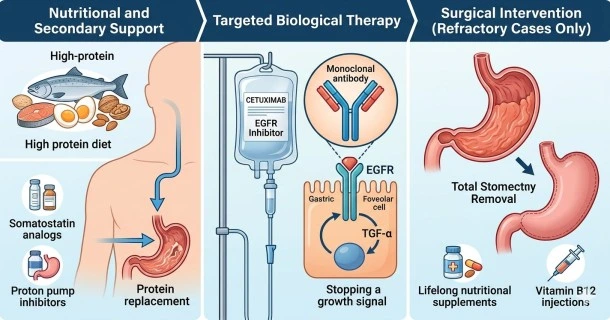
Explore treatment options for Ménétrier's disease. Learn about targeted Cetuximab (EGFR inhibitor) therapy, specialized diets, and gastrectomy criteria.
Ménétrier’s Disease Treatment Options
Because there is no universal cure for Ménétrier’s disease, clinical treatment focuses entirely on halting protein loss, reducing the enlargement of the stomach wall, and preventing malnutrition. Because the adult form is progressive and increases cancer risk, therapy transitions from immediate supportive care to modern, targeted biological solutions.
1. Targeted Biological Therapy (First-Line)
The most significant advancement in treating adult-onset Ménétrier’s disease is targeting the underlying overproduction of Transforming Growth Factor-alpha (TGF-α).
- Cetuximab Infusions: Cetuximab is a neutralizing monoclonal antibody designed to block the Epidermal Growth Factor Receptor (EGFR). By blocking this receptor, cetuximab halts the signals causing uncontrolled cell growth.
- Clinical Outcomes: Clinical trials indicate that a regular regimen of cetuximab can significantly decrease stomach wall thickness, reduce protein leaking, restore normal stomach acid levels, and eliminate the need for surgical removal of the stomach.
2. Pathogen Eradication & Secondary Medications
If diagnostic workups confirm an underlying viral or bacterial trigger, resolving the infection is the highest priority:
- Helicobacter pylori Eradication: In adult cases where H. pylori is detected, a standard triple or quadruple antibiotic regimen combined with a Proton Pump Inhibitor (PPI) is deployed. Successfully clearing the bacteria has led to total disease regression in select individuals.
- Cytomegalovirus (CMV) Management: For acute pediatric cases linked to CMV, antiviral therapies like ganciclovir may be used to shorten the illness.
- Somatostatin Analogs (Octreotide): If biological therapies are unavailable, octreotide injections may be prescribed. Octreotide helps limit fluid loss by reducing overall mucus production and slowing gastric secretion.
- Acid-Suppression Therapies: While the disease typically causes low stomach acid (achlorhydria), short courses of PPIs are sometimes used early on to soothe superficial ulcers and reduce localized upper abdominal burning.
3. Intensive Nutritional Support
To counteract the continuous leaking of blood proteins into the digestive tract, aggressive dietary support is mandatory:
- High-Protein Diet Adjustments: Patients are placed on strict, calorie-dense, hyper-protein nutritional plans to replace lost albumin.
- Total Parenteral Nutrition (TPN): In advanced phases where severe nausea, vomiting, or diarrhea prevents normal eating, patients may require TPN. This process bypasses the digestive system entirely, delivering amino acids, lipids, and electrolytes directly into the bloodstream through a central line.
4. Surgical Intervention (Gastrectomy)
Surgical removal of the stomach is reserved exclusively as a last resort for refractory cases.
- Indications: A partial or total gastrectomy is considered only when a patient suffers from severe, uncontrollable protein loss, unmanageable pain, or when regular surveillance biopsies detect epithelial dysplasia (precancerous changes).
- Post-Surgical Outcome: Removing the stomach resolves the protein leakage and eliminates the threat of gastric adenocarcinoma. However, it requires permanent lifestyle adjustments, including lifelong vitamin B12 injections and modified eating schedules.
Make sure to double-check the physical label of any prescribed medication to confirm dosage values and product details are accurate before beginning a treatment regimen.
Frequently Asked Questions
How long do patients typically need to take cetuximab for Ménétrier’s disease?
Because Ménétrier's disease is chronic in adults, cetuximab is generally utilized as a long-term maintenance therapy. Initial response is usually measured after a one-month loading phase. If tissue samples show structural healing, patients often continue maintenance infusions spaced every two to four weeks to suppress the hyperactive growth loop.
Can dietary changes alone fix the protein loss caused by the disease?
No, dietary changes cannot fix the underlying issue. A high-protein diet is crucial for replacing the albumin lost through the stomach wall, but it does not fix the wide cellular junctions or shrink the enlarged folds. Dietary modifications must always be paired with medical treatments like cetuximab or infection eradication to truly halt the underlying disease mechanism.
What is the prognosis for children undergoing treatment for this condition?
The prognosis for children is outstanding. Because pediatric Ménétrier’s disease is usually an acute reaction to a viral infection like CMV, the condition is self-limiting. Treatment focuses primarily on short-term nutritional and fluid support, and the stomach lining typically heals completely within a few weeks to months without permanent damage.