
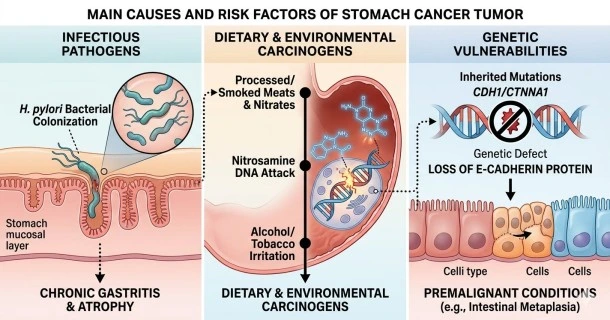
Understand what causes stomach cancer tumors. Explore the physiological impacts of chronic H. pylori infections, dietary nitrosamines, and inherited CDH1 mutations.
Stomach Cancer Causes and Risk Factors
Determining exactly what causes stomach cancer tumors involves understanding a complex interplay between long-term environmental exposures, chronic infectious tissue damage, and genetic vulnerabilities. According to epidemiological data compiled by the American Cancer Society (ACS), structural damage to cellular DNA inside the inner gastric lining drives the uncontrolled replication of malignant cells.
While certain unmodifiable risk factors like age and biological sex influence statistical prevalence, specific bacterial pathogens and dietary variables actively damage the gastric mucosa over time.
Primary Infectious Trigger: H. Pylori
The single most significant contributor to non-cardia gastric adenocarcinoma is long-term infestation by the bacterium Helicobacter pylori (H. pylori).
- H Pylori Chronic Gastritis Cancer Risk: This specialized pathogen burrows underneath the protective mucous layer of the stomach, releasing enzymes that trigger a persistent immune reaction.
- Cellular Progression: Decades of untreated bacterial colonization lead to active chronic gastritis, which progresses into atrophic gastritis. The stomach loses its specialized glandular structures, setting a foundation for precancerous mutations.
Dietary and Environmental Factors
What is consumed plays a direct role in creating a carcinogenic environment within the acidic stomach chamber:
- Dietary Nitrates Nitrosamines Gastric Cancer: Consuming large quantities of foods preserved via heavy salting, smoking, or chemical curing (such as processed meats and pickled vegetables) introduces high amounts of nitrates. Inside the stomach, these compounds transform into highly active N-nitroso compounds (nitrosamines), which chemically attack the DNA of the lining cells.
- Tobacco Smoking: Inhaling tobacco smoke introduces systemic carcinogens that mix with swallowed saliva, doubling the risk of developing cancers near the upper gastroesophageal junction.
- Obesity and Acid Reflux: Excess body mass alters intra-abdominal pressure, forcing stomach acid upward. This chronic exposure drives Gastroesophageal Reflux Disease (GERD), a key driver of cancers localized to the gastric cardia.
Genetic Vulnerabilities and Inherited Syndromes
While the vast majority of stomach malignancies are sporadic, inherited genetic flaws account for roughly 1% to 3% of all cases:
[Gastric Cancer Genetic Risk Profile]
│
┌──────────────────────┼──────────────────────| ▼ ▼ ▼
[CDH1/CTNNA1 Mutations] [Lynch Syndrome] [FAP / GAPPS]
• Causes Hereditary Diffuse • Mismatch repair gene • Causes massive gastric
Gastric Cancer (HDGC) • Increases multi-organ polyposis
• Loss of E-cadherin protein cancer risks • Induces glandular mutations
- Hereditary Diffuse Gastric Cancer Genetic Mutations: Inherited mutations in the CDH1 gene (and rarely CTNNA1) significantly increase the lifetime risk of developing diffuse-type stomach cancer. This mutation disrupts the production of E-cadherin, a structural protein essential for keeping cells bound together, allowing scattered cancer cells to invade the stomach wall rapidly.
- Lynch Syndrome: An inherited defect in mismatch repair genes that impairs the body's ability to fix errors during DNA replication, raising the likelihood of developing both colorectal and gastric malignancies.
Premalignant Stomach Conditions
Several chronic illnesses alter the cellular landscape of the stomach, acting as premalignant stomach conditions causes:
- Intestinal Metaplasia: A condition where the standard stomach cells are replaced by cells resembling the intestinal lining due to chronic injury.
- Pernicious Anemia: An autoimmune condition that destroys parietal cells, leading to a profound lack of stomach acid and a statistical rise in neuroendocrine tumor formations.
- Ménétrier's Disease: A rare condition characterized by massive overgrowth of mucus-producing surface cells that increases long-term cancer risk.
- If you are concerned about these risk factors or are experiencing ongoing digestive issues, view the specific warning signs to look out for in our guide to Stomach Cancer Symptoms.
Frequently Asked Questions
If I test positive for H. pylori, does it mean I will get stomach cancer?
No. While H. pylori is present in over 60% of non-cardia stomach cancer cases, the vast majority of individuals carrying this common bacterium never develop malignancy. The cancer risk depends heavily on the specific strain of the bacteria (such as those expressing the CagA protein), the duration of the infection, and your individual genetic background.
How does alcohol consumption impact my risk of developing stomach cancer?
Clinical data indicates that regular, heavy alcohol intake—typically defined as consuming three or more standard drinks per day—significantly increases gastric cancer risk. Alcohol acts as a local tissue irritant, breaking down the protective mucosal barrier and making the underlying cells more vulnerable to direct DNA damage from other environmental carcinogens.
Can stomach cancer be fully prevented if it runs in my family?
For families with confirmed genetic syndromes like Hereditary Diffuse Gastric Cancer (HDGC), proactive clinical strategies are highly effective. Individuals carrying the pathologically confirmed CDH1 mutation often choose to undergo a prophylactic (preventative) total gastrectomy in early adulthood, removing the stomach entirely to eliminate the tumor threat before cells can transform.