
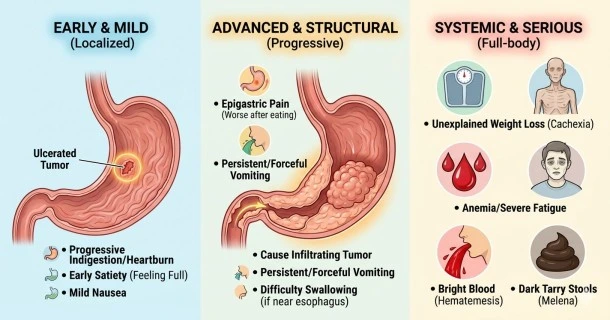
Recognize the early warning signs of stomach cancer. Learn how to identify progressive indigestion, dark tarry stools, and unexplained weight loss.
Recognizing Stomach Cancer Symptoms
One of the greatest challenges in identifying stomach cancer (gastric cancer) early is that its initial signs are often deceptively mild. In its earliest phases, a growing tumor produces subtle disturbances that easily mimic benign conditions like acid reflux, standard indigestion, or a mild peptic ulcer.
However, as the malignant cells continue to multiply and invade the muscular layers of the stomach wall, these signs become progressively more severe, persistent, and systemic.
Early Warning Signs of Stomach Cancer
During the initial stages of gastric adenocarcinoma, localized mucosal disruptions or minor changes in stomach motility can cause several intermittent digestive symptoms:
- Gastric Cancer Progressive Indigestion: Persistent heart burn, frequent burping, and mild upper abdominal discomfort that does not respond to standard over-the-counter antacids or dietary changes.
- Mild Nausea: An intermittent feeling of queasiness, especially following meals, which may or may not lead to occasional vomiting.
- Early Satiety: Feeling unusually full or bloated after consuming only a few bites of food. This happens because the tumor can physically reduce the flexible holding capacity of the stomach chamber or disrupt normal neuromuscular expansion.
Advanced and Structural Symptoms
As a tumor expands and alters the deep architecture of the stomach or begins to block the passage of food, symptoms become highly pronounced and unmistakable:
- Stomach Cancer Pain After Eating Location: Patients typically report a deep, gnawing, or burning pain localized in the epigastric region (the upper center of the abdomen, directly below the breastbone). This pain is frequently triggered or aggravated shortly after a meal.
- Persistent, Forceful Vomiting: If a tumor grows near the pylorus (the lower exit valve of the stomach), it can cause a mechanical gastric outlet obstruction. This leads to severe vomiting, sometimes containing food consumed hours or even days prior.
- Difficulty Swallowing (Dysphagia): When a tumor is located in the upper cardia region or near the gastroesophageal junction, it gradually narrows the entry path. This makes swallowing solid food progressively difficult or painful.
Systemic Signifiers of Advanced Malignancy
Because an invasive tumor consumes vast bodily resources and can cause slow, hidden internal bleeding, several full-body symptoms emerge:
- Unexplained Weight Loss: A rapid, involuntary drop in body mass that occurs without changes to diet or exercise, often accompanied by severe muscle wasting (cachexia).
- Dark Tarry Stools (Melena): Chronic bleeding from an ulcerated tumor surface undergoes chemical breakdown by stomach acid and digestive enzymes. This transforms the blood into a characteristic foul-smelling, sticky, pitch-black stool.
- Vomiting Blood (Hematemesis): Active, acute upper gastrointestinal bleeding can cause a patient to vomit bright red blood or dark material that resembles dark coffee grounds.
- Severe Fatigue and Anemia: Constant microscopic blood loss depletes the body's iron stores, inducing iron-deficiency anemia. This manifests clinically as profound, unremitting fatigue, pale skin, and shortness of breath during minimal exertion.
- If you or a loved one are experiencing these progressive symptoms, learn about the endoscopies, staging scans, and cellular tissue samples required for confirmation in our specialized guide to Diagnosing Stomach Cancer.
Frequently Asked Questions
How can I tell the difference between normal indigestion and stomach cancer signs?
The most critical differentiators are persistence, progression, and the presence of "red flag" symptoms. Normal indigestion or a typical ulcer flare-up is temporary, fluctuates in intensity, and usually resolves with antacids, lifestyle edits, or brief medical therapy. Stomach cancer symptoms do not permanently disappear; they gradually worsen over weeks or months and are eventually accompanied by systemic signs like unexplained weight loss, difficulty swallowing, or dark stools.
Does stomach cancer always cause noticeable pain in its early stages?
No, early-stage stomach cancer is frequently entirely asymptomatic or completely silent. The stomach wall is highly distensible, meaning a microscopic tumor can grow for a long time without creating enough physical pressure or structural blockage to trigger nerve pain receptors.
What does it mean if my doctor finds occult blood during a symptom workup?
Occult blood means that there are microscopic traces of blood hidden within your stool that are completely invisible to the naked eye. While this can be caused by many benign conditions like hemorrhoids or minor colon polyps, in the context of progressive upper abdominal pain, it indicates the need for an immediate upper endoscopy to ensure an ulcerated gastric tumor is not the source of the bleeding.